
Explore Our Best Laptops by Use Case
This guide to Best Laptops for Architecture Students in 2026: 8 Top Picks for AutoCAD, Revit & 3D Rendering is part of our curated laptop recommendations by use case. Explore more expert comparisons and buying guides designed to help you choose the right laptop for architecture school, AutoCAD, Revit, BIM, CAD, 3D modeling, rendering, visualization, and other demanding academic and creative workloads.Best Laptops for Architecture Students in 2026: 8 Top Picks for AutoCAD, Revit & 3D Rendering
The best laptop for architecture students in 2026 is not simply the most powerful or most expensive machine. The right choice depends on the software you use, the size and complexity of your projects, how much 3D modeling and rendering you perform, and whether your workflow centers on AutoCAD, Revit, Rhino, SketchUp, BIM, visualization, or a combination of these tools.From drafting and architectural modeling to BIM coordination, rendering, presentations, and increasingly complex student projects, today's laptops can deliver excellent performance across demanding architecture workflows. The key is matching the processor, dedicated GPU, memory, storage, display, and portability to the way you actually work.
In this guide, we've selected the best laptops for architecture students in 2026 based on processor performance, GPU capability, RAM capacity, storage speed, display quality, multitasking, thermals, portability, software compatibility, and long-term value. We also considered the practical requirements of students working with AutoCAD, Revit, Rhino, Grasshopper, SketchUp, Enscape, Lumion, V-Ray, Adobe Creative Cloud, and other architecture and visualization software.The ASUS ProArt P16 with Ryzen AI 9 HX 370, RTX 5070, 64GB of RAM, and a 4K OLED display leads our selection as a premium all-around platform for students combining BIM, 3D modeling, visualization, and creative work. The Lenovo Legion Pro 5i Gen 10 offers a strong balance of high-end performance and value for students who need substantial GPU power for Revit, Rhino, rendering, and other demanding workloads, while the Lenovo ThinkPad P16 Gen 3 provides a professional workstation platform for large BIM projects and advanced technical workloads.Students who need powerful performance in a more portable design can consider the ASUS ROG Zephyrus G16, while the MSI Vector 16 HX AI is built around the kind of high-performance GPU hardware that suits particularly demanding 3D rendering workflows. For students working with a tighter budget, the Lenovo Legion LOQ provides a more accessible entry point with dedicated RTX graphics. Mac users can turn to the Apple MacBook Pro with M5 Pro for compatible modeling, creative, and presentation workflows, although Windows remains the more practical platform for architecture programs that depend heavily on Revit and other Windows-based applications.
HIDevolution ASUS ProArt P16 H7606WP
Best Overall for Revit, AutoCAD, 3D Modeling & Rendering
The HIDevolution ASUS ProArt P16 H7606WP with the AMD Ryzen AI 9 HX 370, NVIDIA GeForce RTX 5070 with 8GB of GDDR7 memory, 64GB of LPDDR5X RAM, and a 2TB PCIe 4.0 NVMe SSD is our Best Overall Laptop for Architecture Students in 2026. Its combination of high-end CPU performance, dedicated RTX graphics, substantial memory capacity, fast storage, and a 16-inch 4K OLED touchscreen creates a powerful platform for demanding architecture workflows including Revit, AutoCAD, Rhino, SketchUp, BIM, 3D modeling, visualization, and rendering. The 64GB memory configuration is particularly valuable for students who regularly move between large architectural models, rendering applications, Adobe Creative Cloud tools, browsers, and multiple professional applications simultaneously.
The ProArt P16 earns our Best Overall Laptop for Architecture Students award because it combines high-end CPU and GPU performance, 64GB of memory, 2TB of fast storage, and a 4K OLED touchscreen in a single premium configuration. For students who need one machine for BIM, CAD, 3D modeling, rendering, visualization, and creative work, this configuration provides substantial hardware headroom without requiring a traditional desktop workstation.
Compared with performance-focused laptops such as the Lenovo Legion Pro 5i Gen 10 and workstation-oriented systems such as the Lenovo ThinkPad P16 Gen 3, the ProArt P16 takes a more balanced approach by combining powerful GeForce RTX graphics, 64GB of memory, a 4K OLED touchscreen, and a design aimed at both professional creative work and demanding architecture workflows. Its exact HIDevolution configuration is particularly important, as the 64GB RAM and 2TB SSD specified here belong to this particular commercial configuration.
Key Features
Lenovo Legion Pro 5i Gen 10
Best Performance Value for Revit, AutoCAD & 3D Rendering
The Lenovo Legion Pro 5i Gen 10 with the Intel Core Ultra 9 275HX, NVIDIA GeForce RTX 5070, 32GB of DDR5-5600 memory, and 2TB SSD is our Best Performance for the Money for architecture students in 2026. Its combination of a high-performance processor, dedicated RTX graphics, substantial memory, fast storage, and 16-inch 2560 × 1600 OLED display creates a powerful platform for demanding architecture workflows including Revit, AutoCAD, Rhino, SketchUp, BIM, 3D modeling, visualization, and rendering. The configuration is particularly attractive to students who want strong graphics performance for architecture software without moving into the cost and specialized positioning of a professional mobile workstation.
The Legion Pro 5i Gen 10 earns our Best Performance for the Money designation because it combines a high-end Core Ultra 9 processor, RTX 5070 graphics, 32GB of RAM, 2TB of storage, and a high-resolution OLED display in a configuration designed around performance. For architecture students who expect to use Revit, AutoCAD, Rhino, SketchUp, and demanding visualization or rendering applications, it provides a strong balance between hardware capability and overall system versatility.
Compared with the ASUS ProArt P16, the Legion Pro 5i Gen 10 takes a more performance-focused approach with a larger, heavier chassis and a gaming-oriented design, while the ProArt emphasizes a premium creative experience and 64GB of memory. Compared with the Lenovo ThinkPad P16 Gen 3, the Legion uses GeForce RTX graphics rather than a professional RTX PRO platform, making it particularly relevant to students who prioritize general 3D performance, visualization, and rendering over workstation-specific features.
Key Features
Lenovo ThinkPad P16 Gen 3
Best Professional Workstation for Revit, BIM & Advanced Architecture Workflows
The Lenovo ThinkPad P16 Gen 3 with an Intel Core Ultra 7 255HX, 64GB of DDR5 memory, NVIDIA RTX PRO 3000 Blackwell graphics with 12GB of GDDR7, and a 2TB PCIe Gen5 Performance SSD is our Best Professional Workstation for Architecture Students in 2026. Its workstation-class configuration is designed for demanding architecture workflows involving Revit, BIM coordination, AutoCAD, Rhino, complex 3D models, visualization, simulation, and professional CAD applications. The 24-core processor, 64GB of memory, professional RTX PRO graphics, and high-speed Gen5 storage provide substantial headroom for large projects and demanding multitasking, while the 16-inch WQUXGA display combines 3840 × 2400 resolution, 100% DCI-P3 coverage, 800-nit brightness, HDR 400, Dolby Vision, and factory X-Rite color calibration for detailed architectural visualization and extended professional work sessions.
The ThinkPad P16 Gen 3 earns our Best Professional Workstation award because it combines a 24-core Core Ultra 7 255HX processor, professional RTX PRO 3000 Blackwell graphics with 12GB of GDDR7, 64GB of DDR5 memory, a 2TB Gen5 SSD, and a high-resolution color-calibrated 16-inch display in a workstation-focused platform. For advanced architecture students working with large BIM projects, professional CAD applications, complex 3D models, and demanding technical workflows, its configuration provides the kind of hardware headroom associated with professional mobile workstations rather than conventional student laptops.
Compared with performance-oriented laptops such as the Lenovo Legion Pro 5i Gen 10 and premium creative systems such as the ASUS ProArt P16, the ThinkPad P16 Gen 3 places greater emphasis on professional workstation graphics, large memory capacity, business-class connectivity, durability, and professional architecture and engineering workflows. Its RTX PRO platform and 64GB configuration make it particularly relevant for advanced BIM and CAD workloads, while the Legion Pro 5i and ProArt P16 can appeal more to students who place greater emphasis on performance-focused consumer graphics, creative versatility, portability, or value.
Key Features
HP ZBook Power G11 A
Best Workstation Value for Revit, AutoCAD & 3D Modeling
The HP ZBook Power G11 A with an AMD Ryzen 7 PRO 8845HS, NVIDIA RTX 1000 Ada graphics with 6GB of GDDR6, 32GB of DDR5 memory, and a 1TB PCIe NVMe SSD is our Best Workstation Value for Architecture Students in 2026. It combines professional workstation hardware with a more accessible configuration for students who need reliable performance for Revit, AutoCAD, Rhino, BIM, 3D modeling, simulation, and architecture-focused multitasking without moving immediately into a high-end mobile workstation. Its 8-core, 16-thread Ryzen PRO processor, dedicated RTX graphics, 32GB RAM, and 16-inch WUXGA display provide a practical foundation for demanding architecture-school workflows, while Windows 11 Pro and workstation-oriented features make it well suited to professional software environments.
The ZBook Power G11 A earns our Best Workstation Value award because it brings professional workstation characteristics, dedicated NVIDIA RTX graphics, 32GB of DDR5 memory, a Ryzen 7 PRO processor, and Windows 11 Pro into a more accessible architecture-focused configuration. For students who need more professional hardware than a conventional productivity laptop but do not require the higher-end CPU, GPU, and memory configurations of premium workstations, it provides a balanced platform for Revit, AutoCAD, BIM, 3D modeling, and technical coursework.
Compared with the Lenovo ThinkPad P16 Gen 3, the ZBook Power G11 A uses a lower-tier RTX 1000 Ada GPU and 32GB of RAM rather than the ThinkPad's RTX PRO 3000 Blackwell and 64GB configuration, making it better aligned with students who want workstation features at a lower system level. Compared with performance-focused laptops such as the Lenovo Legion Pro 5i Gen 10, the ZBook places greater emphasis on professional workstation design, business features, and technical software workflows rather than maximum gaming-oriented GPU performance.
Key Features
ASUS ROG Zephyrus G16 GU606AR-XB96
Best Portable Performance for Revit, AutoCAD & 3D Rendering
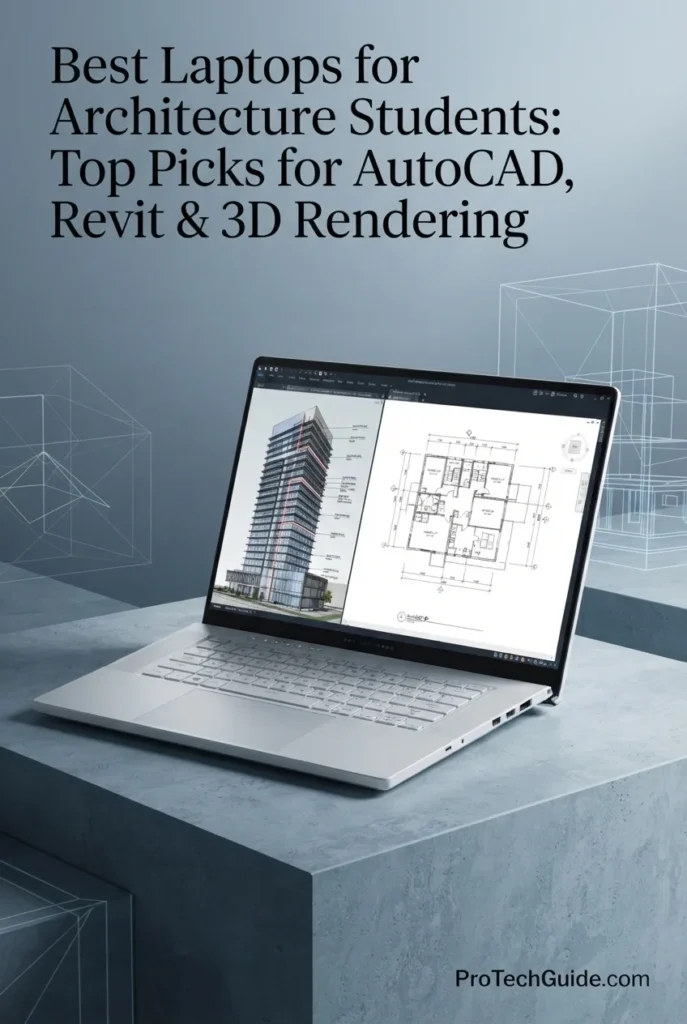
The ASUS ROG Zephyrus G16 GU606AR-XB96 with the Intel Core Ultra 9 386H, 32GB LPDDR5X memory, RTX 5070 Ti 12GB GDDR7, and 1TB PCIe 4.0 NVMe SSD is our Best Portable Performance pick for architecture students in 2026. Its 16-core processor, dedicated NVIDIA graphics, high-speed memory, fast SSD, and 16-inch 2560 × 1600 OLED ROG Nebula display create a powerful platform for demanding architecture workflows including Revit, AutoCAD, Rhino, Grasshopper, SketchUp, 3D modeling, visualization, and GPU-accelerated rendering. At 4.3 pounds, the Zephyrus G16 also offers a more mobile form factor than many larger performance-oriented laptops, making it particularly attractive to architecture students who need substantial graphics performance without carrying a traditional workstation-class machine.
The Zephyrus G16 earns our Best Portable Performance award because it combines a powerful 16-core Intel Core Ultra 9 processor, RTX 5070 Ti graphics with 12GB GDDR7, 32GB high-speed memory, a 1TB PCIe 4.0 SSD, and a premium 16-inch OLED display in a relatively lightweight 4.3-pound chassis. For architecture students balancing demanding 3D workloads with the need for daily mobility, it provides a strong combination of performance, display quality, and portability.
Compared with larger performance-focused systems such as the Lenovo Legion Pro 5i Gen 10 and professional workstation-oriented models such as the Lenovo ThinkPad P16 Gen 3, the Zephyrus G16 places greater emphasis on portability while still delivering dedicated RTX 5070 Ti graphics and 32GB of memory. Students handling especially large BIM projects or workstation-certified professional workflows may prefer a heavier workstation platform, while those prioritizing mobility and high-end 3D performance can benefit from the Zephyrus G16's more portable design.
Key Features
MSI Vector 16 HX AI
Best for Heavy 3D Rendering, Visualization & Advanced Architecture Workflows
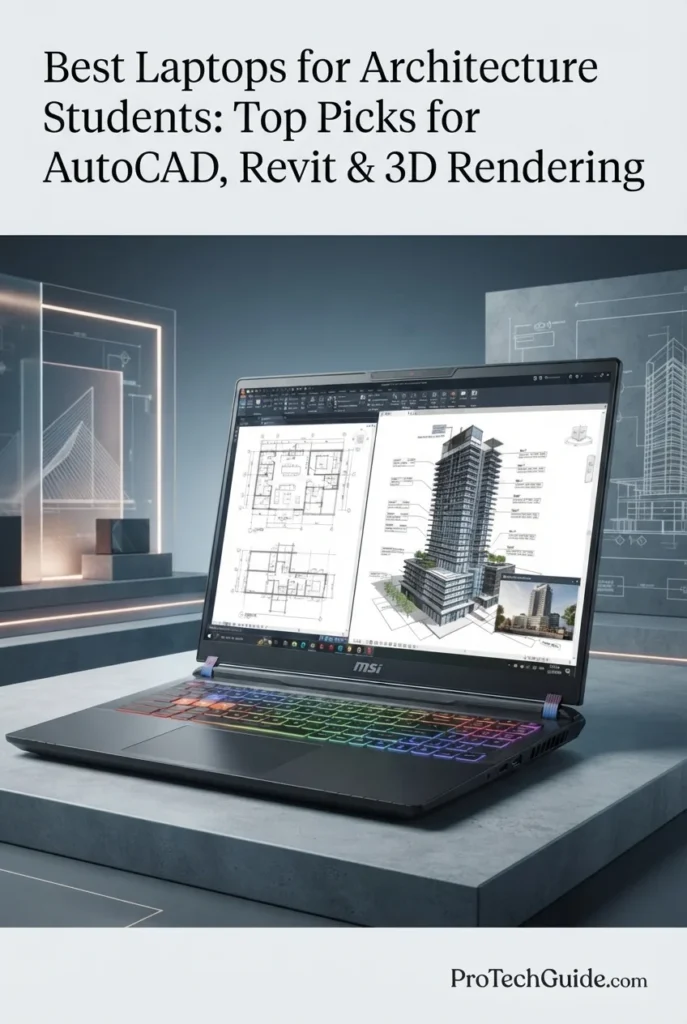
The MSI Vector 16 HX AI with the Intel Ultra 9 275HX, 32GB DDR5 memory, NVIDIA GeForce RTX 5080 with 16GB of graphics memory, and 1TB SSD is our Best for Heavy 3D Rendering pick for architecture students in 2026. Its 24-core processor, high-end RTX 5080 graphics, 16GB graphics memory, 32GB system memory, fast SSD, and 16-inch QHD+ 240Hz display provide a powerful platform for demanding architecture workflows including Revit, AutoCAD, Rhino, Grasshopper, SketchUp, BIM, real-time visualization, GPU rendering, animation, and advanced 3D modeling. This configuration is particularly compelling for students working with complex scenes, high-resolution assets, detailed architectural models, and rendering-intensive projects where GPU capability becomes a major part of the workflow.
The MSI Vector 16 HX AI earns our Best for Heavy 3D Rendering award because its combination of a 24-core Intel Ultra 9 275HX processor and RTX 5080 graphics with 16GB of graphics memory is specifically suited to architecture students whose workloads extend beyond conventional CAD into demanding 3D visualization and rendering. It provides considerably more GPU headroom than mainstream architecture laptops, making it particularly valuable for complex scenes, high-resolution assets, real-time visualization, and GPU-accelerated rendering workflows.
Compared with the ASUS ROG Zephyrus G16 GU606AR-XB96, the MSI Vector 16 HX AI places greater emphasis on maximum graphics performance, with an RTX 5080 and 16GB of graphics memory versus the Zephyrus G16's RTX 5070 Ti 12GB configuration. Compared with workstation-oriented systems such as the Lenovo ThinkPad P16 Gen 3, the Vector is more performance-focused around high-end GPU workloads and 3D rendering, while a professional workstation may be preferable for users who specifically prioritize workstation-class features and professional certification requirements.
Key Features
Lenovo Legion LOQ AI-Powered Gaming Laptop
Best Budget Laptop for AutoCAD, SketchUp & Student Architecture Work

The Lenovo Legion LOQ AI-Powered Gaming Laptop with an Intel Core i7-13650HX, GeForce RTX 5050, 16GB DDR5 memory, and 1TB SSD is our Best Budget Option for architecture students in 2026. Its 13th-generation Intel Core i7 HX processor, dedicated NVIDIA graphics, 16GB of DDR5 memory, fast 1TB SSD, and 15.6-inch 144Hz FHD IPS display create a capable platform for everyday architecture-school workflows including AutoCAD, SketchUp, 2D drafting, basic 3D modeling, presentations, Adobe applications, and lighter BIM projects. The configuration is particularly attractive for students who need dedicated GPU performance without moving into the higher price and weight of professional workstations or premium gaming laptops.
The Lenovo Legion LOQ earns our Best Budget Option for Architecture Students award because it combines a capable Core i7 HX processor, dedicated RTX graphics, 16GB DDR5 memory, 1TB SSD storage, and a 144Hz IPS display in a configuration designed to deliver considerably more graphics capability than a typical entry-level student laptop. It is best suited to students whose workloads center on AutoCAD, SketchUp, coursework, 2D drafting, and lighter 3D work rather than very large BIM models or sustained professional rendering.
Compared with higher-tier options such as the Lenovo Legion Pro 5i Gen 10 and HP ZBook Power G11 A, the Legion LOQ uses a more accessible 16GB memory configuration and a more basic FHD display, making it less appropriate for large Revit projects, advanced BIM workflows, and demanding 3D rendering. However, for architecture students who primarily need AutoCAD, SketchUp, drafting, modeling, presentations, and general coursework performance, its combination of dedicated RTX graphics, HX-series CPU performance, 1TB storage, and practical pricing makes it a strong budget-oriented fit.
Key Features
Apple 2026 MacBook Pro
Best MacBook for Rhino, SketchUp & Creative Architecture Workflows
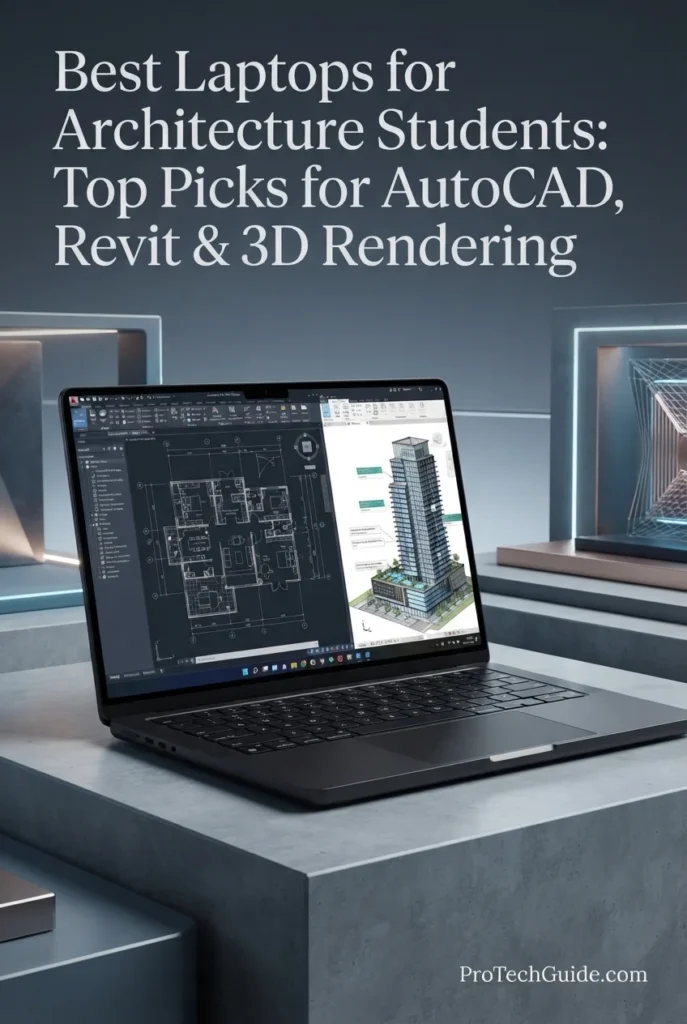
The Apple 2026 MacBook Pro with the M5 Pro chip, 24GB of unified memory, and 1TB SSD is our Best MacBook for Architecture in 2026. Its 15-core CPU, 16-core GPU, high-bandwidth unified memory architecture, fast SSD, and 14.2-inch Liquid Retina XDR display provide a powerful platform for macOS-compatible architecture workflows including Rhino, SketchUp, Adobe Creative Cloud, architectural presentations, documentation, concept development, and visual communication. The M5 Pro configuration offers substantial performance for students and designers who prioritize portability, display quality, battery efficiency, and a premium macOS environment, while the Windows-centric nature of applications such as Revit should be considered before choosing this platform.
The MacBook Pro earns our Best MacBook for Architecture award because it combines M5 Pro performance, 24GB of unified memory, fast 1TB storage, a premium Liquid Retina XDR display, strong portability, and Apple's power-efficient architecture in a compact professional laptop. It is particularly compelling for architecture students working with Rhino, SketchUp, Adobe applications, presentations, and visual communication, provided their academic software requirements are compatible with macOS.
Compared with Windows laptops such as the Lenovo Legion Pro 5i Gen 10 and ASUS ProArt P16 H7606WP, the MacBook Pro offers a distinct combination of macOS, Apple silicon efficiency, premium display quality, portability, and Apple-device integration. However, students whose coursework depends heavily on Autodesk Revit or other Windows-specific architecture applications should evaluate software compatibility carefully before choosing macOS, making this a specialized architecture recommendation rather than a universal Windows replacement.
Key Features
Best Laptops for Architecture Students in 2026
Compared by CPU Performance, GPU Power, RAM Capacity, AutoCAD, Revit, SketchUp, Rhino, 3D Rendering, Display Quality, Portability & Overall Value
Choosing the best laptop for architecture students in 2026 requires more than comparing processor specifications. Architecture students need enough memory for BIM projects and large CAD files, strong CPU performance for modeling and calculations, a capable dedicated GPU for 3D visualization and rendering, fast storage for project libraries, an accurate and comfortable display for drawings and presentations, and reliable compatibility with professional architecture software. We evaluated these laptops around real-world architecture workflows including AutoCAD, Revit, SketchUp, Rhino, Grasshopper, Enscape, Lumion, V-Ray, Adobe Creative Cloud, BIM coordination, 3D modeling, rendering, multitasking, and studio productivity to help you choose the right laptop for your architectural workflow.
| Laptop | CPU & Key Specs | Best For | Why It Wins | Editor's Verdict |
|---|---|---|---|---|
Best Overall
HIDevolution ASUS ProArt P16 H7606WP
Check Price
|
Ryzen AI 9 HX 370 RTX 5070 8GB GDDR7 64GB LPDDR5X 2TB PCIe 4.0 SSD 16" 4K OLED Touch |
Architecture Students Revit & BIM 3D Modeling Rendering & Visualization | The ASUS ProArt P16 combines a powerful Ryzen AI 9 HX 370 processor, RTX 5070 graphics, 64GB of memory, and a 2TB SSD in a remarkably portable 16-inch design. Its 4K OLED touchscreen is particularly well suited to architectural drawings, 3D models, presentations, and visual work, while the dedicated GPU provides the graphics headroom needed for demanding Revit, SketchUp, Rhino, and real-time visualization workflows. | Best Overall Laptop for Architecture Students |
Best Performance Value
Lenovo Legion Pro 5i Gen 10
Check Price
|
Core Ultra 9 275HX RTX 5070 32GB DDR5-5600 2TB SSD 16" 2560x1600 OLED 165Hz |
Revit & BIM AutoCAD & SketchUp 3D Visualization Architecture Students | The Legion Pro 5i Gen 10 delivers a strong combination of high-end CPU performance, dedicated RTX graphics, 32GB of DDR5 memory, and 2TB of storage. Its 16-inch OLED display provides a high-resolution workspace for CAD drawings and 3D models, while its extensive connectivity makes it well suited to architecture studios, external displays, storage devices, and demanding Windows-based workflows. | Best Performance Value for Architecture Students |
Best Professional Workstation
Lenovo ThinkPad P16 Gen 3
Check Price
|
Core Ultra 7 255HX RTX PRO 3000 Blackwell 12GB 64GB DDR5 2TB Gen5 Performance SSD 16" WQUXGA 3840x2400 |
Advanced Revit Large BIM Projects Professional CAD Heavy 3D Workloads | The ThinkPad P16 Gen 3 is built around workstation-class architecture workloads, combining 64GB of RAM, a professional RTX PRO 3000 Blackwell GPU with 12GB of GDDR7 memory, a fast 2TB Gen5 SSD, and a high-resolution 16-inch display. It provides substantial memory and GPU headroom for complex BIM models, advanced CAD workflows, visualization, and professional architecture applications. | Best Professional Workstation for Architecture |
Best Workstation Value
HP ZBook Power G11 A
Check Price
|
Ryzen 7 PRO 8845HS RTX 1000 Ada 6GB 32GB DDR5 1TB PCIe NVMe SSD 16" WUXGA IPS |
Revit & AutoCAD BIM Students CAD Workflows Workstation Buyers | The HP ZBook Power G11 A provides a workstation-oriented platform with a Ryzen 7 PRO processor, professional NVIDIA RTX 1000 Ada graphics, 32GB of DDR5 memory, and 1TB of storage. Its 16-inch display and professional Windows environment make it a practical choice for students who need workstation features for CAD, BIM, modeling, and architecture coursework without moving to the largest mobile workstations. | Best Workstation Value for Architecture Students |
Best Portable Performance
EXCaliberPC ASUS ROG Zephyrus G16
Check Price
|
Core Ultra 9 386H RTX 5070 Ti 12GB GDDR7 32GB LPDDR5X 1TB PCIe 4.0 SSD 16" 2560x1600 OLED 240Hz |
Mobile Architecture Students Rhino & SketchUp 3D Visualization Studio-to-Campus Workflows | The ROG Zephyrus G16 combines RTX 5070 Ti graphics with 32GB of fast LPDDR5X memory in a slim 4.3-pound chassis. Its 2.5K OLED display provides a high-quality visual workspace for architectural modeling and presentations, while the portable design makes it particularly attractive to students who move frequently between campus, studio, home, and collaborative workspaces. | Best Portable Performance Laptop for Architecture |
Best for Heavy 3D Rendering
MSI Vector 16 HX AI Gaming Laptop
Check Price
|
Core Ultra 9 275HX RTX 5080 16GB 32GB DDR5 1TB SSD 16" QHD+ 2560x1600 240Hz |
Enscape & Lumion V-Ray Rendering Advanced 3D Visualization GPU-Heavy Workflows | The MSI Vector 16 HX AI is designed around graphics-intensive workloads, pairing a high-performance Core Ultra 9 275HX processor with an RTX 5080 and 16GB of graphics memory. That combination provides substantial GPU headroom for demanding real-time visualization and rendering workflows, while 32GB of system memory and a high-refresh-rate 16-inch display support intensive architecture studio work. | Best Laptop for Heavy 3D Rendering |
Best Budget Option
Lenovo Legion LOQ AI
Check Price
|
Core i7-13650HX RTX 5050 16GB Memory 1TB SSD 15.6" FHD IPS 144Hz |
Architecture Students AutoCAD SketchUp Entry-Level 3D Work | The Lenovo Legion LOQ AI provides a dedicated RTX 5050 GPU, a capable Core i7 HX-series processor, 1TB of storage, and a 144Hz IPS display in a more accessible gaming-oriented platform. It is particularly suited to students beginning with AutoCAD, SketchUp, introductory 3D modeling, and other architecture coursework, with the option to expand system memory when workloads grow. | Best Budget Laptop for Architecture Students |
Best MacBook
Apple 2026 MacBook Pro 14-inch
Check Price
|
M5 Pro 15-Core CPU / 16-Core GPU 24GB Unified Memory 1TB SSD 14.2" Liquid Retina XDR |
Mac Users Rhino & SketchUp Creative Architecture Work Portable Workflows | The 2026 MacBook Pro combines M5 Pro performance, 24GB of unified memory, fast SSD storage, and an exceptional Liquid Retina XDR display in a highly portable professional design. It is particularly attractive for architecture students using macOS-compatible tools such as Rhino, SketchUp, Adobe applications, and presentation workflows, while students whose curriculum depends heavily on Autodesk Revit or other Windows-specific applications should evaluate software compatibility before choosing macOS. | Best MacBook for Architecture Students |
Recommended Next Reads
Finished comparing the best laptops for architecture students? Explore our related buying guides for AutoCAD, CAD, 3D modeling, graphics performance, engineering workflows, and architecture-friendly laptop budgets.
Whether you're working with Revit and BIM, building models in Rhino or SketchUp, rendering with Enscape or V-Ray, or simply trying to choose the right GPU and budget for architecture school, these guides can help you make a more informed laptop decision for your specific workflow.
Best Laptops for AutoCAD in 2026
Explore laptops selected specifically for AutoCAD 2D drafting, 3D CAD work, professional design workflows, and demanding architectural projects.
Explore AutoCAD Laptops →Best Laptops for CAD in 2026
Compare laptops for AutoCAD, SolidWorks, 3D design, technical modeling, engineering applications, and demanding professional CAD workflows.
Explore CAD Laptops →3D Modeling & RenderingBest Laptops for 3D Modeling in 2026
Find powerful laptops for Blender, 3ds Max, CAD, 3D modeling, visualization, rendering, and GPU-intensive creative workflows.
Explore 3D Modeling Laptops →GPU PerformanceRTX 5060 vs RTX 5070 Ti vs RTX 5080 Laptop GPUs in 2026
Compare the laptop GPUs that matter for 3D visualization, rendering, Enscape, V-Ray, Lumion, and other graphics-intensive architecture workflows.
Compare Laptop GPUs →Engineering & CADBest Laptops for Engineering Students in 2026
Explore laptops designed for CAD, SolidWorks, programming, 3D modeling, technical applications, and demanding engineering coursework.
Explore Engineering Laptops →Budget & PerformanceBest Laptops Under $2000 in 2026
Looking for strong architecture and creative performance without moving into workstation-level pricing? Compare premium laptops around the $2,000 price point.
Explore Laptops Under $2000 →Design & Creative WorkBest Laptops for Graphic Design in 2026
Explore laptops built for visual design, professional displays, Adobe Creative Cloud, image editing, presentations, and creative architecture workflows.
Explore Graphic Design Laptops →EDITOR'S FINAL RECOMMENDATIONS
After comparing laptops across CPU performance, dedicated GPU capability, RAM capacity, AutoCAD, Revit, BIM, SketchUp, Rhino, Grasshopper, Enscape, Lumion, V-Ray, 3D rendering, storage, display quality, portability, software compatibility, thermals, connectivity, and long-term value, these are our final recommendations for architecture students in 2026. The right choice ultimately depends on your software stack, project complexity, rendering requirements, budget, and how often you need to carry your laptop between campus, studio, and home.
HIDevolution ASUS ProArt P16 H7606WP
The strongest overall match for architecture students who want a premium combination of CPU performance, dedicated RTX graphics, abundant memory, fast storage, display quality, and portability. With a Ryzen AI 9 HX 370, RTX 5070, 64GB of memory, and a 4K OLED touchscreen, the ProArt P16 provides substantial headroom for Revit, AutoCAD, SketchUp, Rhino, BIM projects, architectural visualization, and demanding creative workflows.
- ✓ AMD Ryzen AI 9 HX 370
- ✓ NVIDIA GeForce RTX 5070 8GB GDDR7
- ✓ 64GB LPDDR5X Memory
- ✓ 2TB PCIe 4.0 NVMe SSD
Lenovo Legion Pro 5i Gen 10
The performance-focused choice for architecture students who want strong CPU and GPU capability without moving directly into a professional workstation. Its Core Ultra 9 275HX, RTX 5070, 32GB of DDR5 memory, and 2TB SSD provide a powerful platform for Revit, AutoCAD, SketchUp, Rhino, BIM coordination, and 3D visualization, while the 16-inch OLED display adds a premium workspace for drawings and models.
- ✓ Intel Core Ultra 9 275HX
- ✓ NVIDIA GeForce RTX 5070
- ✓ 32GB DDR5-5600 Memory
- ✓ 2TB SSD Storage
Lenovo ThinkPad P16 Gen 3
The workstation choice for architecture students and advanced users working with complex BIM models, large Revit projects, professional CAD applications, advanced visualization, and demanding multitasking. Its 64GB of RAM, RTX PRO 3000 Blackwell graphics with 12GB of GDDR7, 2TB Gen5 SSD, and high-resolution WQUXGA display provide substantially more professional headroom than mainstream student laptops.
- ✓ Intel Core Ultra 7 255HX
- ✓ NVIDIA RTX PRO 3000 Blackwell 12GB GDDR7
- ✓ 64GB DDR5 Memory
- ✓ 2TB PCIe Gen5 Performance SSD
HP ZBook Power G11 A
A practical workstation-oriented option for students who want professional-class hardware for AutoCAD, Revit, BIM, and CAD workflows without stepping up to the largest and most powerful mobile workstations. The Ryzen 7 PRO 8845HS, RTX 1000 Ada graphics, 32GB of DDR5 memory, and 1TB SSD provide a balanced foundation for architecture coursework and professional applications.
- ✓ AMD Ryzen 7 PRO 8845HS
- ✓ NVIDIA RTX 1000 Ada 6GB GDDR6
- ✓ 32GB DDR5 Memory
- ✓ 1TB PCIe NVMe SSD
EXCaliberPC ASUS ROG Zephyrus G16
The portable performance specialist for architecture students who regularly move between campus, studio, home, and collaborative environments. Its RTX 5070 Ti with 12GB of GDDR7, 32GB of LPDDR5X memory, and 2.5K 240Hz OLED display provide a strong combination of graphics capability and visual quality while the 4.3-pound chassis remains considerably easier to carry than a traditional performance workstation.
- ✓ Intel Core Ultra 9 386H
- ✓ NVIDIA GeForce RTX 5070 Ti 12GB GDDR7
- ✓ 32GB LPDDR5X Memory
- ✓ 1TB PCIe 4.0 NVMe SSD
MSI Vector 16 HX AI Gaming Laptop
The graphics-focused choice for architecture students whose workloads extend heavily into real-time visualization and GPU-intensive rendering. With a Core Ultra 9 275HX and RTX 5080 with 16GB of graphics memory, the Vector 16 HX AI provides substantial GPU headroom for demanding Enscape, V-Ray, Lumion, and other visualization workloads while retaining 32GB of system memory for complex multitasking.
- ✓ Intel Core Ultra 9 275HX
- ✓ NVIDIA GeForce RTX 5080 16GB
- ✓ 32GB DDR5 Memory
- ✓ 1TB SSD Storage
Lenovo Legion LOQ AI
The budget-oriented option for architecture students beginning with AutoCAD, SketchUp, introductory 3D modeling, and general architecture coursework. Its Core i7-13650HX processor, RTX 5050 graphics, 16GB of memory, and 1TB SSD provide a dedicated-GPU foundation for student workflows while leaving room to move into more demanding applications as projects become more complex.
- ✓ Intel Core i7-13650HX
- ✓ NVIDIA GeForce RTX 5050
- ✓ 16GB Memory
- ✓ 1TB SSD Storage
Apple 2026 MacBook Pro 14-inch
The MacBook choice for architecture students whose workflow centers on macOS-compatible applications such as Rhino, SketchUp, Adobe Creative Cloud, presentation tools, and other creative architecture software. The M5 Pro, 24GB of unified memory, 1TB SSD, and Liquid Retina XDR display create a premium mobile platform, but students whose curriculum depends heavily on Autodesk Revit or other Windows-specific applications should verify compatibility before choosing macOS.
- ✓ Apple M5 Pro 15-Core CPU / 16-Core GPU
- ✓ 24GB Unified Memory
- ✓ 1TB SSD Storage
- ✓ 14.2-inch Liquid Retina XDR Display
Which architecture laptop should you buy?
ASUS ProArt P16
Lenovo Legion Pro 5i Gen 10
Lenovo ThinkPad P16 Gen 3
HP ZBook Power G11 A
ASUS ROG Zephyrus G16
MSI Vector 16 HX AI
Lenovo Legion LOQ AI
Apple MacBook Pro 14-inch
- Choose the HIDevolution ASUS ProArt P16 if you want the strongest overall combination of CPU performance, RTX graphics, 64GB of memory, 2TB storage, premium display quality, and portability for architecture school.
- Choose the Lenovo Legion Pro 5i Gen 10 if you want high CPU and GPU performance for Revit, AutoCAD, SketchUp, BIM, and 3D visualization while keeping the configuration focused on performance value.
- Choose the Lenovo ThinkPad P16 Gen 3 if you work with large BIM models, advanced CAD projects, professional applications, or demanding architecture workflows where 64GB of RAM and professional RTX PRO graphics provide useful additional headroom.
- Choose the HP ZBook Power G11 A if you want a workstation-oriented architecture laptop for Revit, AutoCAD, BIM, and CAD without moving to a larger high-end mobile workstation.
- Choose the ASUS ROG Zephyrus G16 if portability is a major priority but you still need substantial graphics performance for Rhino, SketchUp, visualization, and other GPU-accelerated architecture workflows.
- Choose the MSI Vector 16 HX AI if your architecture workflow places a particularly heavy emphasis on 3D visualization and GPU-intensive rendering with applications such as Enscape, V-Ray, and Lumion. Its RTX 5080 with 16GB of graphics memory provides considerably more graphics headroom than entry-level dedicated GPUs.
- Choose the Lenovo Legion LOQ AI if you are an architecture student working with AutoCAD, SketchUp, introductory 3D modeling, and general coursework and want a dedicated RTX GPU without moving into the higher price tiers of this lineup. Its 16GB memory configuration is better suited to moderate workloads than exceptionally large BIM or rendering projects.
- Choose the Apple MacBook Pro 14-inch with M5 Pro if your architecture workflow is built around macOS-compatible software such as Rhino, SketchUp, Adobe Creative Cloud, and presentation work. If Revit is a core requirement of your curriculum, verify your school's software requirements and Windows compatibility before choosing a Mac.
EDITOR'S FINAL VERDICT
After comparing CPU performance, GPU capability, RAM capacity, SSD storage, AutoCAD, Revit, SketchUp, Rhino, Grasshopper, Enscape, Lumion, V-Ray, 3D rendering, display quality, portability, connectivity, thermals, software compatibility, and long-term value, one conclusion stands out:The best laptop for architecture students is not necessarily the most powerful workstation or the laptop with the highest-end GPU. It is the system that provides the right balance of processing performance, dedicated graphics power, memory capacity, storage, display quality, portability, software compatibility, and reliability for the architectural workflows you actually perform.
Modern architecture students can move between AutoCAD drafting, Revit BIM models, SketchUp, Rhino and Grasshopper, Adobe Creative Cloud, architectural visualization, Enscape, Lumion, V-Ray, rendering, presentations, and large project files throughout the same academic year. These workflows place very different demands on a laptop, which is why choosing hardware around your actual software and workload is more important than simply buying the most expensive configuration available.
For most architecture students, 32GB of RAM is the ideal long-term target, while 16GB can remain suitable for lighter coursework and entry-level workflows. A dedicated NVIDIA RTX GPU becomes increasingly important for real-time visualization and rendering, while 1TB of fast SSD storage provides a practical foundation for applications, CAD files, BIM projects, textures, renders, and architectural portfolios.- Choose the ASUS ProArt P16 H7606WP if you want the strongest overall combination of CPU performance, RTX graphics, 64GB of memory, 2TB storage, a high-resolution 4K OLED touchscreen, and portability for AutoCAD, Revit, SketchUp, Rhino, rendering, and broader architecture workflows.
- Choose the Lenovo Legion Pro 5i Gen 10 if you want strong CPU and RTX performance, 32GB of memory, 2TB storage, and a high-refresh OLED display while keeping the overall system focused on performance and value for demanding architecture coursework and visualization.
- Choose the Apple MacBook Pro 14-inch with M5 Pro if your architecture workflow is centered on macOS-compatible applications such as Rhino, SketchUp, Adobe Creative Cloud, presentations, and creative production. If Revit, Windows-specific Autodesk workflows, or Windows-only visualization software is essential to your curriculum, verify compatibility before choosing macOS.
- Choose the Lenovo ThinkPad P16 Gen 3 if you regularly work with complex BIM models, professional CAD applications, large architectural assemblies, advanced visualization, or workstation-class workflows that justify 64GB of memory and a professional RTX PRO GPU.
Top Architecture Laptop Recommendations (2026)
ASUS ProArt P16 H7606WP
Our strongest overall recommendation for architecture students because it combines the Ryzen AI 9 HX 370 processor, RTX 5070 graphics, 64GB of memory, 2TB SSD storage, and a 16-inch 4K OLED touchscreen in a relatively portable 4.08-pound chassis. It provides substantial headroom for AutoCAD, Revit, SketchUp, Rhino, rendering, visualization, and demanding multitasking.
- ✓ AMD Ryzen AI 9 HX 370
- ✓ NVIDIA GeForce RTX 5070 8GB GDDR7
- ✓ 64GB LPDDR5X Memory
- ✓ 16-inch 4K OLED Touchscreen
Lenovo Legion Pro 5i Gen 10
A strong performance-focused option for architecture students who need substantial CPU and GPU capability without moving all the way into a professional workstation. Its Core Ultra 9 processor, RTX 5070 graphics, 32GB of DDR5 memory, 2TB SSD, and 16-inch OLED display create a powerful platform for CAD, BIM, 3D modeling, visualization, and rendering workloads.
- ✓ Intel Core Ultra 9 275HX
- ✓ NVIDIA GeForce RTX 5070
- ✓ 32GB DDR5-5600 Memory
- ✓ 2TB SSD + 16-inch 2560×1600 OLED
Apple MacBook Pro 14-inch M5 Pro
The strongest Mac option in this guide for architecture workflows that are compatible with macOS. Its M5 Pro chip, 24GB of unified memory, 1TB SSD, and Liquid Retina XDR display create a premium platform for Rhino, SketchUp, Adobe Creative Cloud, presentations, design development, and other creative architecture tasks. Students dependent on Revit or Windows-specific architecture software should verify compatibility before choosing it.
- ✓ Apple M5 Pro 15-core CPU / 16-core GPU
- ✓ 24GB Unified Memory
- ✓ 1TB SSD Storage
- ✓ 14.2-inch Liquid Retina XDR Display
- ✓ You want the strongest overall combination for architecture school
- ✓ You regularly work with AutoCAD, Revit, SketchUp, Rhino, and 3D visualization
- ✓ You want 64GB of memory and 2TB of fast SSD storage
- ✓ You want RTX 5070 graphics combined with a premium 4K OLED display
- ✓ You want workstation-level capability in a more portable design
- ✓ Performance and value are major priorities
- ✓ You want a powerful Core Ultra 9 processor and RTX 5070 GPU
- ✓ You want 32GB of memory and 2TB of storage for architecture projects
- ✓ You want a high-quality OLED display for modeling, visualization, and media work
- ✓ You do not require a professional workstation-class RTX PRO GPU
- ✓ Prefer 32GB of RAM for demanding architecture workloads and long-term use
- ✓ Consider 16GB acceptable for lighter coursework, drafting, and moderate 3D work
- ✓ Prioritize a dedicated NVIDIA RTX GPU if Enscape, Lumion, V-Ray, or other GPU-accelerated rendering is part of your workflow
- ✓ Choose at least 1TB of SSD storage when working with large CAD files, BIM models, textures, renders, and Adobe projects
- ✓ Verify Windows compatibility if Revit or other Windows-specific architecture applications are essential to your curriculum
- ✓ Consider 64GB of memory and a higher-tier professional GPU if you regularly handle complex BIM models, advanced rendering, or workstation-class projects
An architecture laptop is a professional tool that may be used for thousands of hours across CAD drafting, BIM modeling, 3D visualization, rendering, research, presentations, Adobe Creative Cloud, portfolio development, and university projects. Raw processor specifications matter, but GPU capability, memory capacity, display quality, storage, portability, software compatibility, thermals, and long-term reliability can have an equally important impact on everyday architecture work.
Among the models evaluated in this guide, the ASUS ProArt P16 H7606WP delivers the strongest overall combination of CPU performance, RTX 5070 graphics, 64GB of memory, 2TB storage, 4K OLED display quality, portability, and versatility, making it our Editor's Choice for the best laptop for architecture students in 2026.The Lenovo Legion Pro 5i Gen 10 provides a powerful performance-oriented alternative for students who prioritize CPU/GPU capability and value, while the Lenovo ThinkPad P16 Gen 3 is designed for students and advanced users who need professional workstation-class hardware for demanding CAD and BIM environments. The Apple MacBook Pro with M5 Pro remains a premium option for compatible macOS-based architecture workflows, but students whose curriculum depends heavily on Revit or Windows-specific applications should verify software compatibility before choosing it.
Compare current prices, configurations, memory, GPU specifications, storage, display quality, warranty coverage, and availability before choosing the laptop that best matches your architecture workflow and university requirements.
Check Latest DealEDITOR'S FAQ
Choosing the best laptop for architecture school requires more than comparing processor specifications. Architecture students move between AutoCAD drafting, Revit BIM modeling, SketchUp, Rhino and Grasshopper, Adobe Creative Cloud, rendering engines, real-time visualization, presentations, and increasingly complex project files.These frequently asked questions address the most important architecture laptop decisions, from determining how much RAM and GPU power you need for Revit and 3D rendering to choosing between Windows and macOS, understanding whether a dedicated RTX GPU is necessary, and selecting the right laptop for AutoCAD, SketchUp, Rhino, Enscape, Lumion, and demanding BIM workflows.
It provides a particularly strong combination of the Ryzen AI 9 HX 370 processor, NVIDIA GeForce RTX 5070 graphics, 64GB of LPDDR5X memory, 2TB PCIe 4.0 NVMe storage, and a 16-inch 4K OLED touchscreen. That combination gives architecture students substantial headroom for AutoCAD, Revit, SketchUp, Rhino, 3D modeling, visualization, rendering, and demanding multitasking.
- Strong AMD Ryzen AI 9 HX 370 processing performance.
- NVIDIA GeForce RTX 5070 with 8GB GDDR7 dedicated graphics.
- 64GB of memory for demanding architecture workflows.
- 2TB SSD for CAD files, BIM projects, applications, textures, and renders.
- 16-inch 4K OLED touchscreen for detailed modeling and visual work.
For students who prioritize performance value, the Lenovo Legion Pro 5i Gen 10 provides a powerful alternative, while the Lenovo ThinkPad P16 Gen 3 is better suited to professional workstation-class CAD and BIM workloads. The Apple MacBook Pro remains an option for architecture workflows that are compatible with macOS.
Check PriceArchitecture software can consume considerably more memory than a typical productivity workload, especially when students work with Revit models, large CAD drawings, SketchUp scenes, Adobe applications, browsers, rendering tools, and multiple applications simultaneously.
- 16GB → Suitable for lighter AutoCAD, SketchUp, basic 3D modeling, coursework, and moderate multitasking.
- 32GB → Recommended for most architecture students using Revit, AutoCAD, SketchUp, Rhino, Adobe applications, and regular 3D workflows.
- 64GB → Better for complex BIM models, large architectural assemblies, heavy multitasking, advanced rendering, and longer-term workstation use.
If you are starting architecture school and expect your projects to become more complex over several years, 32GB provides a more comfortable long-term target. The ASUS ProArt P16 and Lenovo ThinkPad P16 Gen 3 in this guide take this further with 64GB configurations for demanding workflows.
A student working primarily with smaller AutoCAD drawings, basic SketchUp models, introductory Revit projects, and standard university assignments can use 16GB effectively. However, memory requirements increase as project complexity, model size, rendering, and multitasking increase.
- 16GB can handle many introductory AutoCAD and SketchUp workflows.
- 16GB can be workable for smaller Revit projects and moderate BIM tasks.
- 32GB provides significantly more headroom for Revit, Rhino, Adobe applications, and multitasking.
- 32GB is preferable when working with larger architectural models and visualization tools.
- 64GB becomes valuable for complex BIM models, heavy rendering, virtual machines, and advanced professional workflows.
In this guide, the Lenovo Legion LOQ represents the more budget-oriented 16GB configuration, while the 32GB and 64GB systems provide greater headroom for architecture workloads that are likely to become more demanding as students progress toward advanced studio and thesis projects.
Check Budget OptionBasic 2D drafting does not require the same graphics capability as real-time rendering or advanced architectural visualization. AutoCAD 2D and lighter productivity workflows can operate with less graphics power, but applications such as Enscape, Lumion, V-Ray, and other visualization workflows can benefit substantially from dedicated GPU resources.
- Integrated graphics → Can be suitable for basic 2D CAD, office work, research, and lighter architecture tasks.
- RTX 5050 / RTX 5060-class GPUs → Suitable for students who need dedicated graphics for 3D modeling and entry-to-mid-level visualization.
- RTX 5070 / RTX 5070 Ti → Provides a stronger balance for demanding architecture, BIM visualization, and real-time rendering workloads.
- RTX 5080 and professional RTX PRO GPUs → Better suited to particularly demanding rendering, visualization, complex professional workflows, and workstation-class use.
This is why the laptops in this guide use dedicated NVIDIA graphics across the Windows lineup. The GPU should not be selected simply because it is powerful; it should match the rendering, visualization, and 3D workloads you actually expect to perform.
The operating system matters because architecture students often use a combination of CAD, BIM, modeling, rendering, Adobe, and visualization applications. Revit remains a major consideration because its native workflow is Windows-centric, making Windows laptops the more straightforward choice for students whose curriculum depends heavily on Revit.
- Windows → Strong choice for Revit, AutoCAD, Enscape, Lumion, Windows-based Autodesk workflows, and broad architecture software compatibility.
- macOS → Attractive for Rhino, SketchUp, Adobe Creative Cloud, presentations, design development, and other applications that support macOS.
- Windows RTX laptops → Particularly suitable when real-time rendering and GPU-accelerated visualization are central to the workflow.
- MacBook Pro → Premium option when the student's required architecture software is fully compatible with macOS.
The Apple MacBook Pro M5 Pro is therefore a strong option for compatible creative architecture workflows, but students whose courses require Revit or other Windows-specific applications should verify software requirements with their university before choosing a Mac.
Check MacBook ProThe M5 Pro configuration in this guide combines a 15-core CPU, 16-core GPU, 24GB of unified memory, a 1TB SSD, and a 14.2-inch Liquid Retina XDR display. This makes it particularly attractive for Rhino, SketchUp, Adobe Creative Cloud, presentations, design development, research, and other creative architecture workflows.
- Strong Apple M5 Pro processing performance.
- 16-core integrated GPU for compatible creative and 3D applications.
- 24GB unified memory for professional multitasking.
- 1TB SSD for architecture applications and project files.
- High-quality Liquid Retina XDR display for design and visual work.
The main consideration is software compatibility. Students who rely on Revit, Windows-only architecture applications, or specific Windows-based visualization tools should verify compatibility before choosing macOS. A MacBook can be an excellent creative architecture computer, but it should not be treated as a universal replacement for a Windows RTX laptop in every architecture curriculum.
Check MacBook Pro PriceArchitecture projects can accumulate surprisingly large amounts of data. CAD drawings, Revit models, SketchUp files, Rhino projects, textures, rendered images, animations, Adobe files, reference material, libraries, and portfolio assets can quickly consume local storage.
- 512GB → Acceptable for lighter coursework when cloud storage or external drives are used regularly.
- 1TB → Recommended for most architecture students using CAD, BIM, 3D modeling, Adobe applications, and rendering tools.
- 2TB → Better for students who maintain large local project libraries, textures, renders, and multiple professional applications.
- 4TB or more → Appropriate for particularly storage-intensive professional workflows and large local project archives.
A fast PCIe NVMe SSD also helps reduce application and project loading times. For a laptop expected to remain useful throughout several years of architecture school, 1TB provides a much more comfortable baseline than the smallest available storage configuration.
- 14-inch → Best for students who frequently move between classrooms, studios, libraries, home, and campus.
- 16-inch → Better for AutoCAD, Revit, SketchUp, Rhino, split-screen workflows, detailed modeling, and long studio sessions.
A larger 16-inch 16:10 display can provide more usable workspace for tool palettes, property panels, model views, reference documents, and multiple applications. This can be particularly useful when working on complex CAD and BIM projects.
The ASUS ROG Zephyrus G16 is particularly attractive for students who want high-end performance in a relatively portable 16-inch design, while the Apple MacBook Pro 14-inch and other compact systems are better suited to students who prioritize mobility above maximum screen area.
Check Portable 16-inch OptionIts Core Ultra 7 255HX processor, NVIDIA RTX PRO 3000 Blackwell Laptop GPU with 12GB GDDR7, 64GB of DDR5 memory, 2TB PCIe Gen5 SSD, and 16-inch WQUXGA display provide substantial hardware headroom for demanding architecture environments.
- 64GB of memory for complex BIM models and heavy multitasking.
- NVIDIA RTX PRO 3000 Blackwell graphics with 12GB GDDR7.
- 2TB PCIe Gen5 SSD for large architecture projects and applications.
- High-resolution 16-inch 3840×2400 display with 100% DCI-P3 coverage.
- Professional workstation design and extensive connectivity.
It can be more hardware than many undergraduate students need for basic AutoCAD or smaller Revit projects. However, it becomes substantially more relevant when architecture coursework involves complex BIM assemblies, professional CAD workflows, advanced visualization, or workloads that benefit from workstation-class hardware.
View ThinkPad P16There is no single configuration that perfectly matches every architecture student. A student primarily using AutoCAD and SketchUp has different requirements from someone working with Revit, Enscape, Lumion, Rhino, Grasshopper, V-Ray, or large BIM projects. Your laptop should therefore be selected around your expected workflow rather than specifications alone.
- Best Overall → ASUS ProArt P16 H7606WP
- Best Performance Value → Lenovo Legion Pro 5i Gen 10
- Best Professional Workstation → Lenovo ThinkPad P16 Gen 3
- Best Workstation Value → HP ZBook Power G11 A
- Best Portable Performance → ASUS ROG Zephyrus G16
- Best for Heavy 3D Rendering → MSI Vector 16 HX AI
- Best Budget Option → Lenovo Legion LOQ AI
- Best MacBook → Apple MacBook Pro 14-inch M5 Pro
If you want the strongest all-around combination of CPU performance, RTX graphics, 64GB memory, 2TB storage, and a premium display, the ASUS ProArt P16 is the most complete fit in this guide. If performance value is your priority, the Legion Pro 5i Gen 10 provides a powerful alternative. For professional workstation requirements, the ThinkPad P16 Gen 3 provides substantially more workstation-oriented hardware. And if your architecture curriculum is compatible with macOS, the MacBook Pro M5 Pro offers a premium portable creative platform.
Check Best Overall DealARCHITECTURE LAPTOP BUYING GUIDE
Choosing a laptop for architecture school is not simply about finding the fastest processor or the most expensive gaming machine. Architecture students need a system that can handle AutoCAD drawings, Revit BIM models, SketchUp scenes, Rhino and Grasshopper projects, Adobe Creative Cloud, 3D visualization, rendering, presentations, and increasingly complex studio work while remaining reliable throughout several years of university.The wrong laptop can become a daily source of frustration through insufficient RAM, weak graphics performance, limited storage, poor display quality, software incompatibility, excessive weight, or unnecessary hardware that provides little benefit for your actual workflow. Avoid these common mistakes before choosing your next architecture laptop.
The best architecture laptop is rarely the one with the most impressive specification sheet. For architecture students, CPU performance, dedicated GPU capability, memory capacity, SSD storage, display quality, software compatibility, portability, thermals, and long-term reliability all contribute to productivity.For most architecture students in 2026, 32GB of memory is a strong long-term target, paired with a dedicated NVIDIA RTX GPU if 3D visualization or rendering is part of the workflow. A 1TB SSD provides a practical baseline for CAD files, BIM projects, textures, applications, renders, and portfolio work, while 64GB of memory and higher-tier graphics become more relevant for complex professional workloads.
Choosing Only 8GB or 16GB of RAM
- Architecture workflows can involve Revit, AutoCAD, SketchUp, Rhino, Adobe applications, browsers, rendering tools, and reference material running simultaneously.
- Large BIM models and complex 3D scenes can consume substantially more memory than basic 2D drafting.
- Insufficient memory can reduce multitasking responsiveness and become a limitation as architecture projects become more demanding.
Better decision:Choose 32GB of memory when possible for architecture school. A 16GB configuration can still be appropriate for lighter AutoCAD, SketchUp, and introductory workflows, while 64GB becomes valuable for complex Revit models, advanced rendering, heavy multitasking, and workstation-class projects.
Buying a Dedicated GPU You Do Not Need
- Not every architecture student performs GPU-intensive rendering. Basic 2D AutoCAD work places very different demands on a laptop than real-time visualization.
- Paying for an extremely high-end GPU can increase the laptop's price, weight, heat, and power consumption without providing a meaningful advantage for lighter workflows.
- GPU requirements increase substantially when using applications such as Enscape, Lumion, V-Ray, and other demanding visualization or rendering tools.
Better decision:Match the GPU to your actual architecture workflow. Prioritize a dedicated NVIDIA RTX GPU when 3D modeling, real-time visualization, or rendering is important. Students focused primarily on 2D drafting and lighter modeling do not necessarily need the highest-tier GPU available.
Ignoring Revit and Architecture Software Compatibility
- Revit is a major consideration for architecture students and remains a Windows-centric application.
- Other Autodesk, rendering, visualization, and engineering applications can have platform-specific requirements.
- Choosing a Mac without checking the software requirements for your architecture program can create unnecessary workflow limitations.
Better decision:Choose Windows if Revit, Windows-based Autodesk applications, Enscape, Lumion, or other Windows-specific tools are essential to your curriculum. macOS can be an excellent platform for compatible applications such as Rhino, SketchUp, Adobe Creative Cloud, and other creative workflows, but software compatibility should be verified before choosing a MacBook.
Choosing Too Little SSD Storage
- Architecture projects can accumulate Revit models, CAD drawings, SketchUp scenes, Rhino files, textures, rendered images, Adobe projects, applications, and portfolio assets.
- A nearly full SSD can make project management increasingly inconvenient as your architecture library grows.
- Large rendering assets, textures, libraries, and local project archives can require substantially more storage than ordinary university documents.
Better decision:Target 1TB of SSD storage for most architecture students. A 512GB SSD can work for lighter workloads and students who rely heavily on external or cloud storage, while 2TB or more is preferable for large project libraries, textures, renders, and storage-intensive workflows.
Buying More Performance Than Your Architecture Workflow Requires
- Not every student needs a workstation-class Core Ultra 9 processor, RTX 5080 graphics, or a professional RTX PRO GPU.
- Excess performance can increase purchase cost, weight, heat, and power consumption without providing a proportional productivity advantage for basic AutoCAD or smaller SketchUp projects.
- A balanced laptop can provide better portability and value than a specification-heavy workstation when the workload does not require it.
Better decision:Match hardware to the size and complexity of your architecture projects. A balanced 32GB laptop with a capable RTX GPU is sufficient for many students, while a workstation such as the ThinkPad P16 Gen 3 becomes more relevant when your workflow requires additional memory, professional graphics, storage, or sustained workstation-class capability.
Overlooking Display Size and Workspace
- Architecture students can spend hours comparing drawings, BIM models, property panels, tool palettes, reference images, and rendering windows.
- A small display can make detailed modeling and split-screen multitasking more difficult.
- Larger 16-inch displays can provide additional workspace for CAD, BIM, modeling, rendering, and presentation work.
Better decision:Choose a 14-inch laptop when portability is the priority and a 16-inch model when screen workspace and multitasking matter more. If you primarily work at a studio desk, pairing the laptop with an external monitor can provide additional workspace without requiring an oversized mobile workstation.
Smart Buying Advice for Architecture Students
You regularly work with complex Revit BIM models, professional CAD applications, advanced 3D visualization, large architectural assemblies, or demanding rendering workflows. The Lenovo ThinkPad P16 Gen 3 is particularly relevant when you want 64GB of memory, professional RTX PRO graphics, substantial storage, and workstation-oriented connectivity.
Your architecture workflow is compatible with macOS and you prioritize portability, premium construction, display quality, creative applications, Rhino, SketchUp, Adobe Creative Cloud, presentations, and design development. The Apple MacBook Pro with M5 Pro is a strong option for compatible creative architecture workflows, but Revit and other Windows-specific requirements should be verified before purchase.
Key takeaway:The best architecture laptop is not necessarily the fastest or most expensive machine. It is the laptop that provides the right balance of CPU performance, dedicated GPU capability, memory capacity, storage, display quality, software compatibility, portability, and reliability for the CAD, BIM, modeling, rendering, and visualization workflows you actually use.
After evaluating the laptops featured in this guide, these are our Editor's top recommendations for architecture students in 2026:
- Best Overall Architecture Laptop:ASUS ProArt P16 H7606WP — the strongest overall combination of Ryzen AI 9 HX 370 processing, RTX 5070 graphics, 64GB memory, 2TB SSD storage, a 16-inch 4K OLED touchscreen, and portability for AutoCAD, Revit, SketchUp, Rhino, visualization, and demanding architecture workflows.
- Best Performance Value for Architecture:Lenovo Legion Pro 5i Gen 10 — a powerful performance-oriented option combining the Core Ultra 9 275HX, RTX 5070 graphics, 32GB DDR5 memory, 2TB storage, and a 16-inch OLED display for demanding CAD, BIM, modeling, and visualization work.
- Best Professional Workstation:Lenovo ThinkPad P16 Gen 3 — the workstation-oriented choice for complex BIM, professional CAD, advanced visualization, and demanding architecture projects, with 64GB of memory, RTX PRO 3000 Blackwell graphics, and 2TB Gen5 SSD storage.
- Best MacBook for Architecture:Apple MacBook Pro 14-inch M5 Pro — a premium option for Rhino, SketchUp, Adobe Creative Cloud, presentations, and other macOS-compatible architecture workflows, with 24GB unified memory and a Liquid Retina XDR display.
Need help choosing your laptop?
Not sure which option fits your workflow? Get a personalized recommendation based on your budget, performance needs, and usage.
Get personalized recommendation⚡ Usually responds within 24 hours