
Explore Our Best Laptops by Use Case
This guide to Best Battery Life Laptops in 2026: 8 Top Picks for All-Day Productivity & Travel is part of our curated laptop recommendations by use case. Explore more expert comparisons and buying guides to help you choose the right laptop for extended battery life, all-day productivity, business travel, remote work, studying, and everyday computing.Best Battery Life Laptops in 2026: 8 Top Picks for All-Day Productivity & Travel
The best battery life laptop in 2026 is not necessarily the model with the highest advertised runtime. Real-world endurance depends on the processor, display, workload, power settings, and the way you use your computer throughout the day. Whether you need a reliable laptop for business, remote work, studying, or frequent travel, choosing the right combination of battery efficiency, performance, and portability can make a meaningful difference.
In this guide, we've selected the best battery life laptops in 2026 for different needs and budgets, from premium MacBooks and efficient Windows laptops to lightweight travel companions and a versatile Chromebook. Our comparison focuses on battery endurance, everyday performance, portability, display characteristics, productivity features, and overall value. Where independent battery-test results are available for the exact configuration, they should be distinguished from manufacturer estimates, since advertised battery life and real-world runtime can differ substantially.The Apple MacBook Pro with the M5 Pro chip leads our recommendations for users seeking a premium laptop for demanding productivity, while the Dell Pro 14 is aimed at business users who need a practical Windows-based work machine. The Dell XPS 14 offers a more premium design and OLED display, and the ASUS Zenbook A14 emphasizes lightweight portability for travel. For more accessible options, the Lenovo IdeaPad Slim 3X balances everyday computing with efficient hardware, while the MacBook Air 13-inch with M5 is designed for portable all-day productivity. The Lenovo IdeaPad Slim 5X targets efficient Windows workflows, and the Acer Chromebook Plus Spin 514 provides a flexible option for students and browser-based tasks.
Apple MacBook Pro 16 M5 Pro
Premium Performance, All-Day Productivity & Professional Mobility
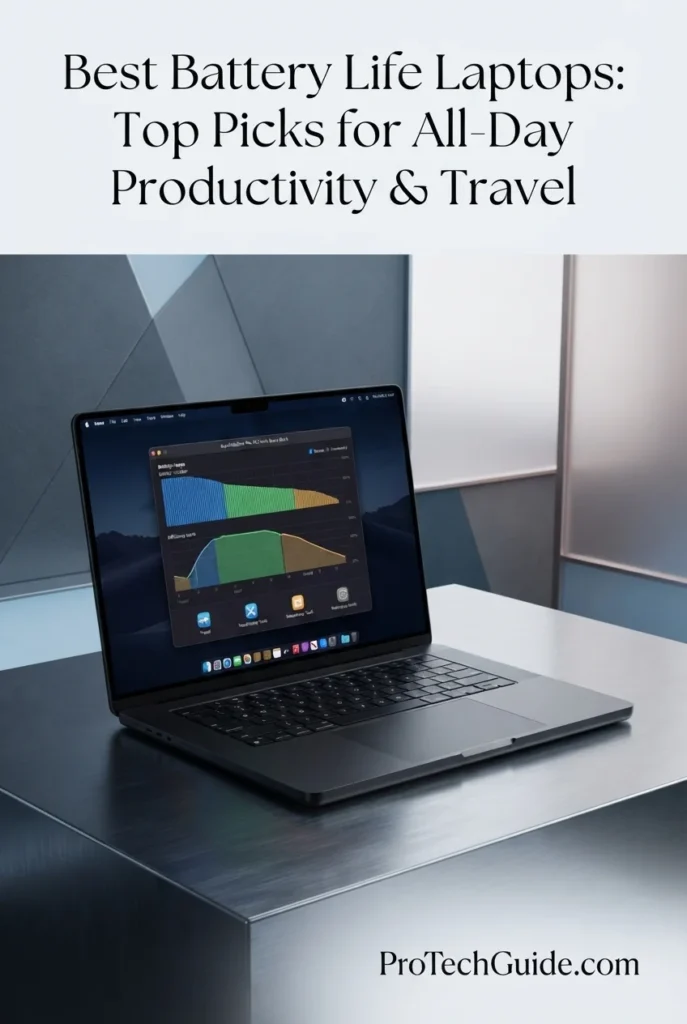
The Apple MacBook Pro 16-inch with the M5 Pro chip, 48GB of unified memory, and 1TB SSD is our premium choice for professionals who need substantial computing power without sacrificing the flexibility of working away from a desk. Its 18-core CPU, 20-core GPU, 16.2-inch Liquid Retina XDR display, and efficient Apple silicon architecture are designed for demanding productivity, creative work, development, and on-device AI tasks. Apple describes the MacBook Pro as offering all-day battery life, although actual runtime depends on workload, display brightness, connectivity, and other settings. For users who regularly switch between intensive projects, meetings, and mobile work, this configuration combines high-performance hardware with a large, high-quality display and modern wireless connectivity.
The MacBook Pro earns our Best Overall for Maximum Battery Life position because it combines Apple's stated all-day battery-life capability with premium performance, 48GB of memory, a large Liquid Retina XDR display, and a comprehensive selection of ports. It is especially compelling for professionals who need one laptop for demanding work and mobile productivity rather than a machine dedicated exclusively to lightweight tasks. However, its advertised battery capability should not be confused with a guaranteed runtime or a verified battery-test result for this exact configuration.
Compared with lighter alternatives such as the Apple MacBook Air 13-inch with M5 and the ASUS Zenbook A14, the 16-inch MacBook Pro prioritizes a larger display, more substantial professional hardware, and greater memory capacity. The trade-off is that its larger chassis and performance-oriented configuration may not suit travelers who place the highest priority on minimizing carry weight. Buyers focused primarily on battery endurance should compare independent test results for the exact configurations they are considering rather than relying on manufacturer estimates alone.
Key Features
Dell Pro 14 Laptop
Efficient Windows Performance for Business, Remote Work & Travel
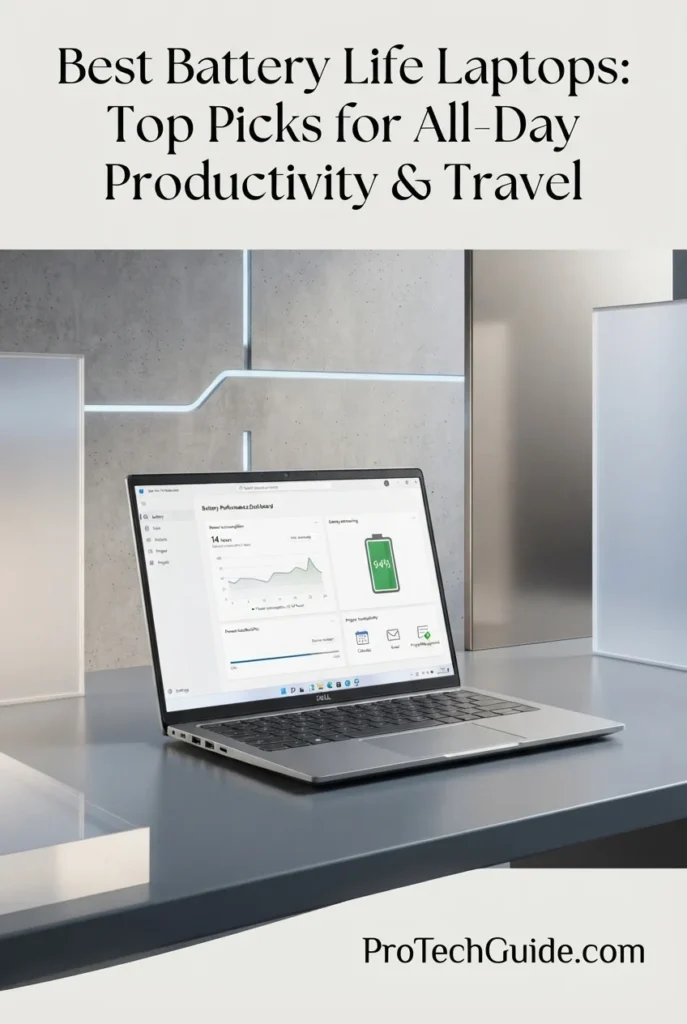
The Dell Pro 14 with an Intel Core Ultra 7 255U processor, 32GB of DDR5 memory, and a 512GB SSD is our business-focused Windows recommendation for professionals who need dependable everyday productivity in a portable laptop. Its 12-core processor, integrated Intel graphics, 14-inch FHD+ display, and Windows 11 Pro configuration are suited to office applications, spreadsheets, video meetings, browser-based workflows, and multitasking. The 54Wh battery provides the hardware foundation for mobile work, while the processor's efficiency-focused design makes this configuration worth considering for users who spend their days moving between meetings, offices, and remote workspaces. However, actual battery life depends on workload and settings, and the listing does not establish a verified runtime for this exact configuration.
The Dell Pro 14 earns our Best Windows Laptop for Business Productivity designation because it combines 32GB of memory, a modern Core Ultra 7 processor, Windows 11 Pro, a practical 16:10 display, and a broad selection of business-friendly ports. Its strengths are particularly relevant to professionals who need a straightforward work machine for office tasks, remote collaboration, and daily multitasking. The 54Wh battery capacity is a useful specification, but it should not be treated as proof of a specific number of hours away from a charger.
Compared with premium alternatives such as the Dell XPS 14 and Apple MacBook Pro 16-inch with M5 Pro, the Dell Pro 14 emphasizes practical business productivity rather than a high-end OLED display or workstation-class graphics. Its 14-inch FHD+ screen and integrated graphics are well suited to everyday work, while Windows 11 Pro and its range of ports can simplify integration into business environments. Buyers prioritizing battery endurance should compare independent test results for this specific Dell Pro 14 configuration rather than relying on results from differently equipped Dell laptops.
Key Features
Dell XPS 14 Premium Laptop
Premium OLED Design, Efficient Performance & Everyday Mobility
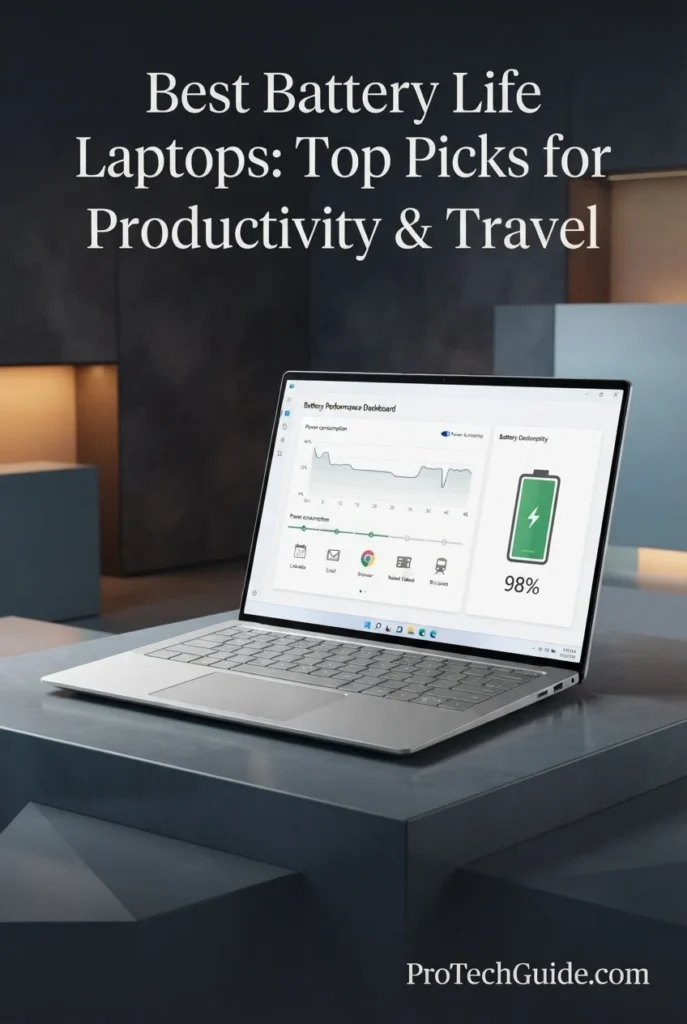
The Dell XPS 14 Premium Laptop DA14250 with an Intel Core Ultra 7 255H processor, 32GB of memory, and a 1TB SSD is our premium Windows recommendation for professionals who want a refined, portable laptop for work, travel, and everyday productivity in 2026. Its 14.5-inch 3.2K OLED touchscreen, integrated Intel Arc graphics, and high-resolution display make it well suited to office applications, research, video calls, content consumption, and creative tasks that benefit from a vivid screen. For battery-conscious users, the 69.5Wh battery and variable 48–120Hz refresh rate are relevant features, although actual endurance will depend on brightness, refresh-rate behavior, workload, and wireless use. We do not assign it a specific all-day runtime without a verified test of this exact OLED configuration.
The Dell XPS 14 earns its Best Premium Windows Laptop position by combining a high-resolution OLED touchscreen, 32GB of memory, a 1TB SSD, modern wireless connectivity, and a polished compact design. It is especially appealing to users who want a premium Windows experience for everyday professional work and travel. Its 69.5Wh battery and variable refresh-rate display are useful parts of the efficiency picture, but shoppers should judge endurance using tests of this specific OLED configuration rather than results from a different XPS display option.
Compared with the Dell Pro 14, the XPS 14 offers a more display-focused premium experience, with a 3.2K OLED touchscreen and a higher-resolution visual workspace. The ASUS Zenbook A14 is another travel-oriented option, particularly for buyers who prioritize low weight and an efficiency-focused Snapdragon platform. For the Dell XPS 14, the OLED panel is a major attraction, but its high resolution and brightness can affect battery consumption; users who prioritize maximum unplugged runtime should compare independent results for the exact configurations before choosing.
Key Features
ASUS Zenbook A14 Copilot+ PC
Ultralight Portability, OLED Clarity & Efficient Windows Productivity
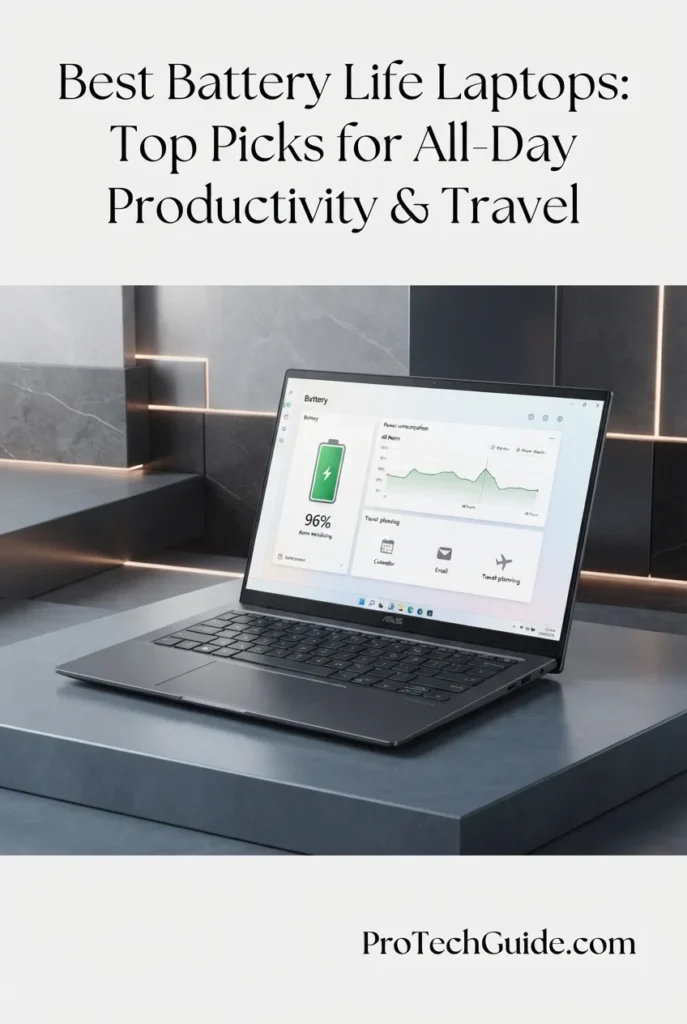
The ASUS Zenbook A14 Copilot+ PC with the Snapdragon X Plus X1-26-100, 32GB of RAM, and a 1TB SSD is our travel-focused recommendation for users who prioritize portability, efficient everyday performance, and long unplugged work sessions in 2026. This configuration combines an 8-core Qualcomm processor with a 14-inch WUXGA OLED display, a 70Wh-class battery, and Windows 11 Home in a compact design. Its 32GB of memory supports multitasking across productivity applications, browser tabs, and communication tools, while the 1TB SSD provides generous local storage. Qualcomm's platform is designed for power-efficient computing, but actual battery life varies with screen brightness, workload, connectivity, and application compatibility. Because this is a retailer-upgraded configuration, buyers should also review the seller's warranty terms before purchasing.
The ASUS Zenbook A14 earns its Best Ultralight Laptop for Travel position by combining a compact 14-inch OLED display, 32GB of memory, 1TB of storage, and an efficiency-focused Snapdragon X Plus processor. Its 70Wh-class battery makes it a promising option for people who work away from a desk, while its lightweight design is especially attractive for commuting and travel. The key consideration is software compatibility: although many everyday Windows applications work well on Snapdragon-based PCs, some applications, peripherals, and specialized tools may behave differently depending on native ARM support or emulation.
Compared with the Dell XPS 14 Premium Laptop, the Zenbook A14 prioritizes portability and an efficiency-focused processor platform rather than a higher-resolution 3.2K OLED screen. It is also worth comparing with the Apple MacBook Air 13-inch with M5, another compact productivity option with an efficiency-focused processor. For battery-life buyers, compare independent runtime tests for the exact Snapdragon X Plus X1-26-100 configuration rather than relying on results from Zenbook A14 models with different processors. This listing is also a seller-upgraded configuration, so its warranty arrangements differ from a standard factory-sealed retail purchase.
Key Features
Lenovo IdeaPad Slim 3X
Efficient Snapdragon Performance, All-Day Productivity & Everyday Mobility
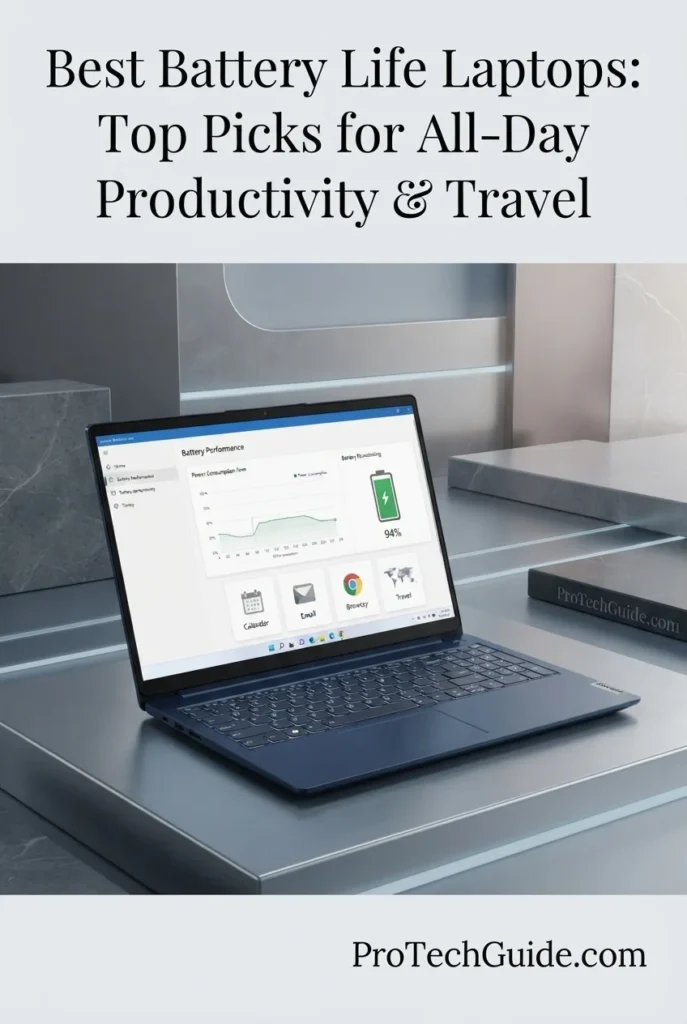
The Lenovo IdeaPad Slim 3X with the Snapdragon X X1-26-100 processor, 16GB of LPDDR5 memory, and a 512GB SSD is our budget-focused recommendation for users who want efficient Windows productivity and dependable everyday mobility. Its eight-core Snapdragon processor, integrated Qualcomm graphics, and dedicated 45 TOPS Neural Processing Unit are designed to balance responsive everyday performance with power-efficient computing. The 60Wh battery and Lenovo's advertised all-day battery life make it an appealing option for students, remote workers, and travelers who want to spend less time searching for a power outlet. Actual runtime will vary with screen brightness, workload, connectivity, and application usage.
The Lenovo IdeaPad Slim 3X earns our Best Budget Laptop for Battery Life award because it combines an efficient Snapdragon platform, a substantial 60Wh battery, 16GB of memory, a 512GB SSD, and a roomy 15.3-inch touchscreen in a productivity-focused Windows laptop. Lenovo advertises all-day battery life, making it a compelling option for people who need to work or study away from an outlet. Its strongest appeal is the balance of everyday performance, useful features, and mobility rather than premium-class processing power. Because the advertised runtime is a manufacturer claim, buyers should not interpret it as a guaranteed number of hours under every workload.
Compared with premium laptops such as the Apple MacBook Air 13-inch with M5 and the ASUS Zenbook A14 Copilot+ PC, the IdeaPad Slim 3X focuses on accessible everyday productivity, a larger touchscreen, and efficient Snapdragon computing rather than premium materials or flagship performance. Its 16GB of memory and 512GB SSD provide a practical configuration for typical school and office tasks. Users who need demanding creative applications, extensive local AI workloads, or verified long-duration battery performance should compare independent tests of the exact configurations before making a final decision.
Key Features
Apple MacBook Air 13-inch with M5
Exceptional Portability, Up to 18 Hours of Battery Life & Everyday Productivity
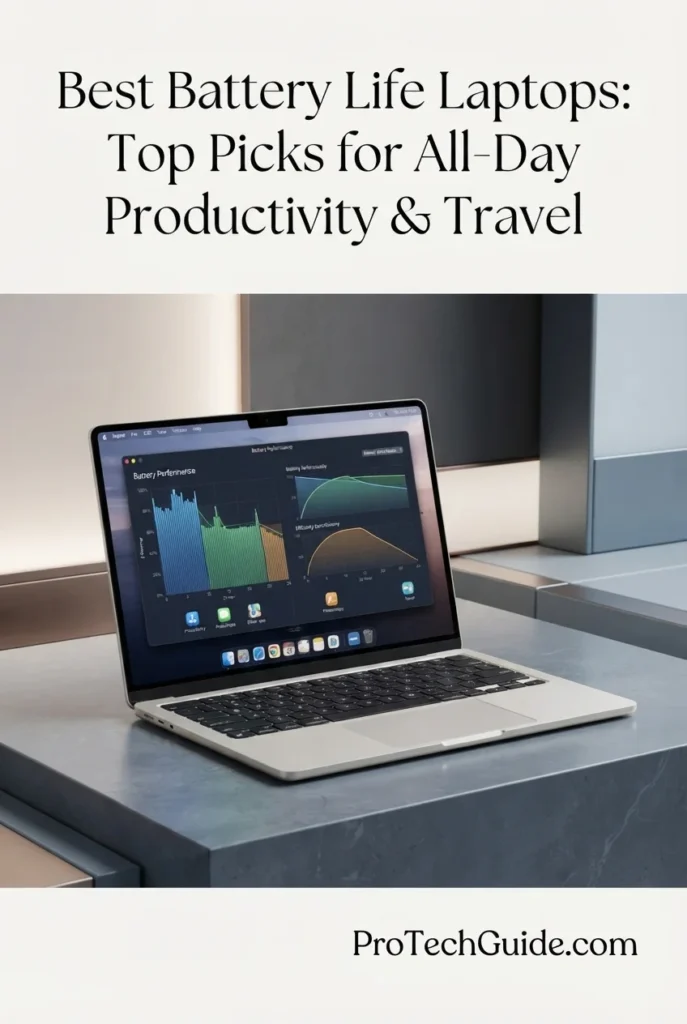
The Apple MacBook Air 13-inch with the M5 chip, 16GB of unified memory, and 1TB SSD is our top recommendation for users who want a lightweight laptop for all-day productivity in 2026. Apple's M5 silicon combines responsive CPU performance, integrated graphics, and a powerful Neural Engine in a portable design built for studying, office work, communication, and compatible AI-assisted tasks. Its 13.6-inch Liquid Retina display, 12MP Center Stage camera, Touch ID, and Wi-Fi 7 connectivity create a capable everyday work environment. Apple advertises up to 18 hours of battery life, making this MacBook Air especially appealing to students, professionals, and travelers who want to work away from a power outlet. Actual battery life varies with workload, display brightness, network activity, and settings.
The MacBook Air 13-inch with M5 earns our Best Lightweight Laptop for All-Day Productivity award because it combines a highly portable design, efficient Apple silicon, 16GB of unified memory, 1TB of storage, and Apple's advertised battery life of up to 18 hours. Its compact display size makes it easy to carry between classrooms, offices, meetings, and travel destinations, while its performance is well suited to everyday productivity and compatible creative workflows. For users who value mobility and long periods away from a charger more than workstation-class performance, it offers a compelling balance of capability and convenience.
Compared with the Apple MacBook Pro 16-inch with M5 Pro, the MacBook Air prioritizes portability and everyday efficiency over the higher-end performance and larger display of Apple's professional model. Compared with the ASUS Zenbook A14 Copilot+ PC, it offers the macOS experience, Apple's ecosystem integration, and a 1TB SSD in this configuration. Buyers should compare independent battery tests for the exact models they are considering, since manufacturer estimates and real-world runtime can differ significantly depending on workload and test conditions.
Key Features
Lenovo IdeaPad Slim 5X
Efficient Snapdragon Performance, All-Day Productivity & Everyday Mobility
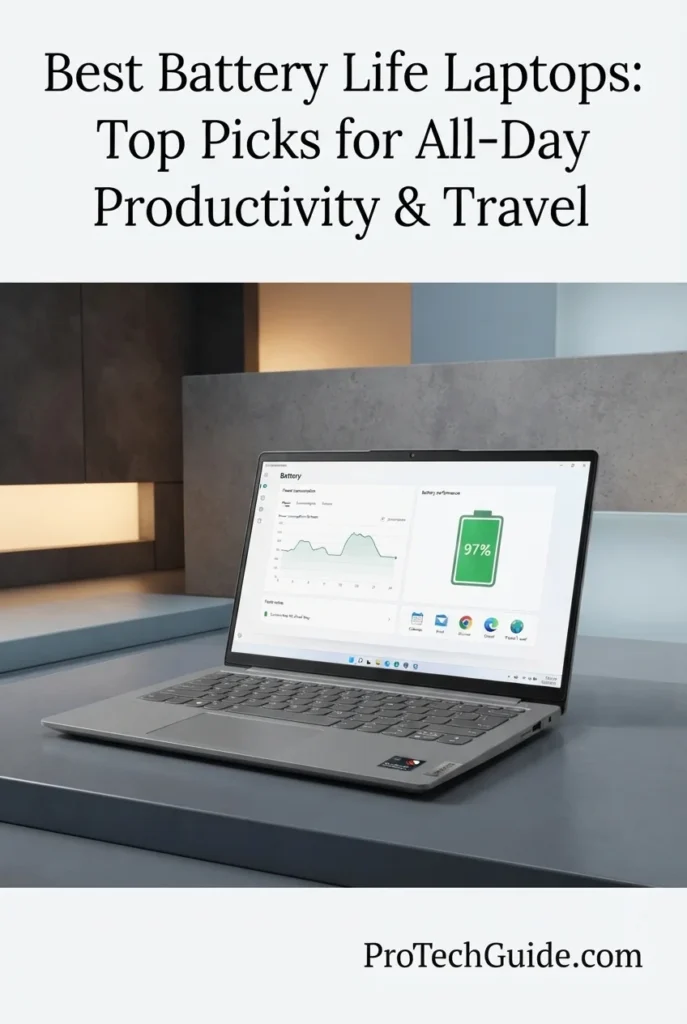
The Lenovo IdeaPad Slim 5X (2026), featuring the Snapdragon X2 Plus X2P-42-100, 16GB of memory, and a 512GB SSD, is a compelling choice for users who want an efficient Windows laptop for everyday productivity, remote work, studying, and travel. Its 15.3-inch IPS WQXGA display, integrated Qualcomm graphics, and power-efficient Snapdragon platform make it well suited to office applications, web browsing, video calls, document editing, and multitasking. With a 54.7Wh battery and a portable chassis weighing approximately 3.1 pounds according to the product listing, it offers a practical balance of screen space, mobility, and everyday computing efficiency. Actual battery life will depend on workload, display brightness, wireless activity, and power settings.
The Lenovo IdeaPad Slim 5X earns its place as Best Laptop for Efficient Windows Productivity because it combines a modern Snapdragon X2 Plus processor, 16GB of memory, a spacious high-resolution display, and a 54.7Wh battery in a practical everyday laptop. It is particularly attractive to users who prioritize mobile productivity and efficient computing over dedicated gaming graphics or workstation-class performance. Its battery capacity is a useful indicator of its mobile design, but it should not be treated as a guaranteed runtime: no specific battery-life figure is claimed here without a verified test of this exact configuration.
Compared with the Apple MacBook Air 13-inch with M5, the Lenovo offers a larger 15.3-inch display and a Windows environment that may better suit users who depend on Windows-specific applications. Against the ASUS Zenbook A14 Copilot+ PC, it emphasizes a larger viewing area and a straightforward productivity-focused design rather than an especially compact form factor. The best choice depends on software compatibility, display preferences, portability requirements, and verified battery-test results. Users considering either laptop primarily for long unplugged work sessions should compare independent runtime measurements for the exact configurations rather than relying on processor branding or battery capacity alone.
Key Features
Acer Chromebook Plus Spin 514
Flexible 2-in-1 Design, Efficient ChromeOS Productivity & Everyday Mobility
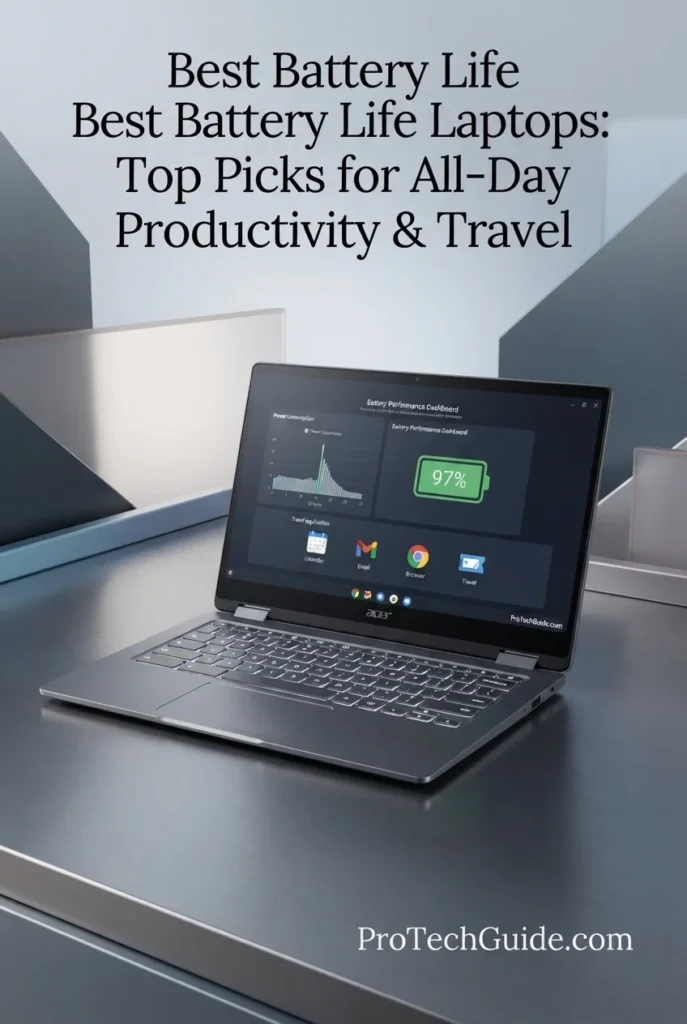
The Acer Chromebook Plus Spin 514 2-in-1, equipped with an Intel Core i5-1334U processor, 8GB of memory, and 512GB of SSD storage, is a versatile option for students and everyday users who want a convertible laptop built around ChromeOS. Its 14-inch WUXGA touchscreen, 100% sRGB color coverage as advertised, integrated Intel Iris Xe graphics, and backlit keyboard make it suitable for online learning, document editing, research, video calls, streaming, and browser-based productivity. The convertible design adds flexibility for touchscreen interaction and compatible tablet-style use, while the advertised Wi-Fi 6E connectivity and 54? battery details aside, the supplied listing does not specify a verified battery capacity or runtime for this exact Intel configuration. It is therefore best considered a practical student-focused option rather than a guaranteed battery-life champion.
The Acer Chromebook Plus Spin 514 earns its place as Best Chromebook for Students because it combines a convertible touchscreen design, a 14-inch WUXGA display, an Intel Core i5 processor, and a straightforward ChromeOS experience. It is particularly appealing to students and everyday users who rely on browser-based tools, online coursework, document editing, and video communication. Its suitability for this battery-life roundup should be judged against verified runtime testing of this specific Intel configuration: the supplied listing does not establish an exact battery capacity or guaranteed number of hours.
Compared with the Lenovo IdeaPad Slim 5X, which runs Windows 11 Home on a Snapdragon platform, the Acer offers ChromeOS and a flexible 2-in-1 touchscreen design rather than a conventional Windows laptop experience. Compared with the Apple MacBook Air 13-inch with M5, it is more focused on browser-centered education and everyday tasks than on a premium macOS productivity environment. Students should choose based on required applications, school software compatibility, display preferences, and independently verified battery results. Anyone who needs desktop Windows applications should confirm their requirements before selecting a Chromebook.
Key Features
Best Battery Life Laptops in 2026
Compared by Battery Efficiency, Processor Platform, Display Quality, Portability, Productivity & Overall Value
Choosing the best battery life laptop in 2026 requires more than comparing battery capacity or manufacturer estimates. Real-world endurance depends on processor efficiency, display technology, screen brightness, workload, wireless connectivity, and power settings. We compared these eight laptops by their processor platforms, advertised battery capabilities where available, portability, productivity features, and suitability for all-day work, study, and travel. Because independently measured battery results are not available for every exact configuration in this lineup, manufacturer claims are distinguished from verified testing rather than presented as directly comparable runtime figures. Use this guide to identify the laptop that best fits your daily workload, operating system preferences, and mobility requirements.
| Laptop | Battery & Key Specs | Best For | Why It Wins | Editor's Verdict |
|---|---|---|---|---|
Best Overall
Apple MacBook Pro 16-inch with M5 Pro (2026)
Check Price
|
Apple M5 Pro Chip 18-Core CPU / 20-Core GPU 48GB Unified Memory 1TB SSD 16.2" Liquid Retina XDR Wi-Fi 7 |
Professional Creators Developers Advanced Multitasking Demanding Workflows | The MacBook Pro combines Apple's high-performance M5 Pro platform with substantial unified memory, fast SSD storage, and a premium professional display. Apple advertises all-day battery life and up to 17 hours of wireless web browsing for this product family. Its balance of processing capability, efficiency, and connectivity makes it a strong option for professionals who need sustained productivity away from a power outlet. | Best Overall Laptop for Premium Performance and Battery Efficiency |
Best Business Laptop
Dell Pro 14
Check Price
|
Intel Core Ultra 7 255U 32GB DDR5 RAM 512GB PCIe NVMe SSD 14" FHD+ IPS Display 54Wh Battery Windows 11 Pro |
Business Professionals Remote Work Office Productivity Corporate Travel | The Dell Pro 14 focuses on practical business productivity, combining an efficient Intel Core Ultra processor with 32GB of memory, Windows 11 Pro, and a compact 14-inch display. Its 54Wh battery provides the hardware foundation for mobile work, while its professional connectivity options make it a practical choice for meetings, office applications, and remote workflows. Exact runtime should be confirmed through testing of this specific configuration. | Best Windows Laptop for Business Productivity |
Best Premium Windows
Dell XPS 14 Premium Laptop
Check Price
|
Intel Core Ultra 7 255H 32GB Memory 1TB SSD 14.5" 3.2K OLED Touch 48–120Hz Display 69.5Wh Battery |
Premium Windows Users Mobile Professionals Content Consumption High-Resolution Workflows | The Dell XPS 14 pairs a premium aluminum-and-glass design with a high-resolution OLED touchscreen, 32GB of memory, and 1TB of storage. Its 69.5Wh battery offers meaningful capacity for a compact premium laptop, although OLED brightness, refresh rate, and workload can affect endurance. This model is best suited to users who prioritize display quality and refined Windows portability alongside battery-conscious performance. | Best Premium Windows Laptop for Display Quality and Mobility |
Best for Travel
ASUS Zenbook A14 Copilot+ PC
Check Price
|
Snapdragon X Plus X1-26-100 8-Core CPU 32GB RAM 1TB SSD 14" WUXGA OLED 70Wh Battery |
Frequent Travelers Mobile Professionals Remote Workers Copilot+ PC Users | The Zenbook A14 combines a power-efficient Snapdragon X Plus platform with 32GB of memory, 1TB of storage, and a 70Wh battery. Its compact 14-inch OLED format is well suited to working across airports, hotels, classrooms, and remote offices. The combination of battery capacity and an efficiency-focused processor makes it a compelling travel option, although the listing's conflicting weight information should be verified before purchase. | Best Ultralight Laptop for Travel and Mobile Productivity |
Best Budget Pick
Lenovo IdeaPad Slim 3X
Check Price
|
Snapdragon X X1-26-100 8-Core CPU 16GB LPDDR5 RAM 512GB SSD 15.3" WUXGA Touchscreen 60Wh Battery |
Students Everyday Productivity Budget-Conscious Buyers Mobile Office Work | The IdeaPad Slim 3X offers an efficiency-focused Snapdragon platform, a 60Wh battery, 16GB of memory, and a spacious 15.3-inch touchscreen. Lenovo advertises all-day battery life, making it an appealing budget-oriented choice for browsing, document editing, online classes, and everyday multitasking. Actual endurance will depend on workload and settings, but its combination of capacity and practical productivity features makes it worth considering. | Best Budget Laptop for Battery-Conscious Productivity |
Best Lightweight Laptop
Apple MacBook Air 13-inch with M5 (2026)
Check Price
|
Apple M5 Chip 16GB Unified Memory 1TB SSD 13.6" Liquid Retina Display Wi-Fi 7 Up to 18 Hours Advertised |
Students Everyday Professionals Frequent Travelers All-Day Productivity | The MacBook Air combines a compact design with Apple's M5 platform, 16GB of unified memory, and a 1TB SSD. Apple advertises up to 18 hours of battery life for the listed configuration, making it a strong candidate for users who value long unplugged work sessions without carrying a larger professional laptop. Its fanless Air design, integrated productivity features, and lightweight form factor suit writing, browsing, video calls, and everyday creative work. | Best Lightweight Laptop for All-Day Productivity |
Best Efficient Windows Laptop
Lenovo IdeaPad Slim 5X (2026)
Check Price
|
Snapdragon X2 Plus X2P-42-100 16GB Memory 512GB Storage 15.3" WQXGA Display 54.7Wh Battery Windows 11 Home |
Windows Productivity Students Remote Work Everyday Multitasking | The IdeaPad Slim 5X combines the Snapdragon X2 Plus platform with a high-resolution 15.3-inch display, 16GB of memory, and 512GB of storage. Its 54.7Wh battery and efficiency-focused processor make it an interesting option for users seeking a balance of screen space, Windows productivity, and mobility. Buyers should confirm the retailer's display, memory, and wireless specifications because the supplied listing contains conflicting details. | Best Laptop for Efficient Windows Productivity |
Best Chromebook
Acer Chromebook Plus Spin 514
Check Price
|
Intel Core i5-1334U 10-Core CPU 8GB RAM 512GB SSD 14" WUXGA IPS Touchscreen ChromeOS |
Students Web-Based Productivity Online Learning Convertible Laptop Users | The Chromebook Plus Spin 514 combines a 14-inch touchscreen, a convertible 2-in-1 design, an Intel Core i5 processor, and ChromeOS for browser-centered productivity and study. Its flexible form factor works well for note-taking, online classes, document editing, and streaming. The supplied listing does not specify a verified battery capacity or runtime for this exact Intel configuration, so it should be considered for its versatility and ChromeOS workflow rather than as a proven battery-life leader. | Best Chromebook for Students and Flexible Everyday Use |
Recommended Next Reads
Finished comparing the best battery life laptops in 2026? Explore our related laptop guides to find the right balance of battery efficiency, portability, productivity, performance, and value for your everyday needs.
Whether you're working remotely, attending classes, traveling frequently, managing a business, or deciding between a MacBook Air and MacBook Pro, choosing the right laptop involves more than battery life alone. These guides will help you compare laptops for different workloads, understand the features that matter most, and find a system that fits your budget, software requirements, and daily routine.
Best Laptops for Remote Work in 2026
Explore laptops for remote professionals, video calls, multitasking, home offices, and flexible workdays. Find the right combination of performance, portability, and everyday reliability for working from almost anywhere.
Explore Remote Work Laptops →Best Business Laptops in 2026
Compare business-focused laptops for office productivity, professional multitasking, meetings, security features, and mobile work across different environments.
Explore Business Laptops → Education & Everyday MobilityBest Laptops for Students in 2026
Find student-friendly laptops for classes, research, assignments, online learning, and campus life, with options for different budgets and study requirements.
Explore Student Laptops → Apple Laptop ComparisonMacBook Air vs. MacBook Pro (2026)
Compare Apple's lightweight Air lineup with the more powerful Pro models to understand the differences in performance, portability, displays, and suitability for demanding workloads.
Compare MacBook Models → Professional ValueBest Business Laptops Under $1,000 in 2026
Explore more affordable business laptops for productivity, remote work, travel, office applications, and everyday professional tasks without exceeding a $1,000 budget.
Explore Business Laptops Under $1,000 → MacBook Buying GuideBest MacBook for College Students in 2026
Compare MacBook options for lectures, research, writing, creative projects, and campus mobility to find an Apple laptop that fits your academic workload and budget.
Explore MacBooks for College → Performance & ValueBest Laptops Under $1,000 in 2026
Discover laptops across different categories and compare practical performance, everyday productivity, portability, and features that matter when shopping on a budget.
Explore Laptops Under $1,000 →EDITOR'S FINAL RECOMMENDATIONS
After comparing these eight laptops across processor efficiency, battery capacity where specified, manufacturer battery-life claims, display technology, portability, memory, storage, and everyday productivity, our final recommendations focus on helping you find the right laptop for your routine. Whether you need a premium machine for demanding professional work, a lightweight companion for frequent travel, a dependable Windows laptop for business, or an affordable system for school, the best choice depends on how you work and how long you need to stay away from a power outlet. Manufacturer estimates are not the same as independent test results, so consider the stated battery specifications alongside your workload and configuration.
Apple MacBook Pro 16-inch with M5 Pro (2026)
Our premium overall choice for professionals who need substantial processing capability without sacrificing mobile productivity. The MacBook Pro combines Apple's M5 Pro platform, 48GB of unified memory, 1TB of SSD storage, and a 16.2-inch Liquid Retina XDR display. Apple advertises up to 17 hours of wireless web browsing for this product family. Its combination of performance, efficiency, and professional features makes it especially attractive to users who want a powerful laptop for demanding work away from a desk.
- ✓ Apple M5 Pro Chip
- ✓ 18-Core CPU / 20-Core GPU
- ✓ 48GB Unified Memory
- ✓ 1TB SSD and 16.2-inch Liquid Retina XDR Display
Dell Pro 14
The Dell Pro 14 is our business-focused recommendation for users who prioritize professional Windows features, multitasking capacity, and a practical 14-inch form factor. Its Intel Core Ultra 7 255U processor, 32GB of memory, 512GB SSD, and 54Wh battery provide a useful foundation for office applications, remote work, and business travel. Because a verified runtime for this exact configuration is not established here, choose it for its business-oriented hardware and confirm independent battery results if all-day unplugged use is essential.
- ✓ Intel Core Ultra 7 255U
- ✓ 32GB DDR5 Memory
- ✓ 512GB PCIe NVMe SSD
- ✓ 14-inch FHD+ Display and 54Wh Battery
Dell XPS 14 Premium Laptop
The XPS 14 is a compelling option for users who want a refined Windows laptop with a high-resolution OLED touchscreen, 32GB of memory, 1TB of storage, and a compact premium design. Its 69.5Wh battery offers substantial capacity for a 14.5-inch system, although actual endurance depends on display brightness, refresh rate, applications, and power settings. Choose this model when premium display quality and mobility matter alongside battery-conscious performance.
- ✓ Intel Core Ultra 7 255H
- ✓ 32GB Memory
- ✓ 1TB SSD Storage
- ✓ 14.5-inch 3.2K OLED Touchscreen and 69.5Wh Battery
ASUS Zenbook A14 Copilot+ PC
The Zenbook A14 is our travel-oriented pick for users who want a compact Windows laptop built around an efficiency-focused Snapdragon X Plus processor. Its 70Wh battery, 32GB of memory, 1TB SSD, and 14-inch OLED display create a strong combination for remote work, writing, browsing, meetings, and everyday productivity while traveling. Before buying, verify the exact weight and connectivity specifications with the retailer, as the supplied listing contains conflicting information.
- ✓ Snapdragon X Plus X1-26-100
- ✓ 32GB Memory
- ✓ 1TB SSD Storage
- ✓ 14-inch WUXGA OLED and 70Wh Battery
Lenovo IdeaPad Slim 3X
The IdeaPad Slim 3X is our budget-oriented choice for everyday users who want an efficiency-focused Snapdragon platform, a 60Wh battery, 16GB of memory, and a spacious 15.3-inch touchscreen. Lenovo advertises all-day battery life, making this configuration worth considering for students, web browsing, document editing, and everyday multitasking. Actual runtime will vary with applications, brightness, connectivity, and power settings, so treat the manufacturer's claim as an estimate rather than a guaranteed result.
- ✓ Snapdragon X X1-26-100
- ✓ 16GB LPDDR5 Memory
- ✓ 512GB SSD Storage
- ✓ 15.3-inch WUXGA Touchscreen and 60Wh Battery
Apple MacBook Air 13-inch with M5 (2026)
The MacBook Air is our recommendation for people who want a lightweight laptop for everyday productivity and extended work away from a charger. This configuration combines Apple's M5 chip, 16GB of unified memory, a 1TB SSD, and a 13.6-inch Liquid Retina display. Apple advertises up to 18 hours of battery life for the listed model. That makes it an appealing option for students, writers, remote professionals, and frequent travelers who value portability without giving up a premium everyday computing experience.
- ✓ Apple M5 Chip
- ✓ 16GB Unified Memory
- ✓ 1TB SSD Storage
- ✓ 13.6-inch Liquid Retina Display and Up to 18 Hours Advertised Battery Life
Lenovo IdeaPad Slim 5X (2026)
The IdeaPad Slim 5X is designed for users who want an efficiency-focused Windows laptop with a generous 15.3-inch display. Its Snapdragon X2 Plus X2P-42-100 platform, 16GB of memory, 512GB of storage, and 54.7Wh battery make it a candidate for office work, study, browsing, and everyday multitasking. Because the supplied retailer listing contains conflicting display, memory, and wireless details, verify the exact configuration before purchasing, especially if specific features are essential to your workflow.
- ✓ Snapdragon X2 Plus X2P-42-100
- ✓ 16GB Memory
- ✓ 512GB Storage
- ✓ 15.3-inch WQXGA Display and 54.7Wh Battery
Acer Chromebook Plus Spin 514
The Chromebook Plus Spin 514 is a versatile choice for students and users whose everyday work takes place primarily in a browser. Its Intel Core i5-1334U processor, 8GB of memory, 512GB SSD, and 14-inch WUXGA IPS touchscreen support web-based productivity, online classes, document editing, and media consumption. Its convertible design adds flexibility for note-taking and touchscreen use. Since the supplied listing does not establish a verified battery runtime for this exact Intel configuration, choose it for its ChromeOS workflow and 2-in-1 versatility rather than a guaranteed all-day runtime.
- ✓ Intel Core i5-1334U Processor
- ✓ 8GB Memory
- ✓ 512GB SSD Storage
- ✓ 14-inch WUXGA IPS Touchscreen and ChromeOS
Which battery life laptop should you buy?
MacBook Pro 16-inch M5 Pro
Dell Pro 14
Dell XPS 14
ASUS Zenbook A14
Lenovo IdeaPad Slim 3X
MacBook Air 13-inch M5
Lenovo IdeaPad Slim 5X
Acer Chromebook Plus Spin 514
- Choose the Apple MacBook Pro 16-inch with M5 Pro if you need premium processing capability, generous memory, a professional display, and an efficient platform for demanding creative and professional workloads. Apple's advertised battery figures provide useful context, but your actual runtime will depend on your workload.
- Choose the Dell Pro 14 if you want a business-focused Windows laptop with 32GB of memory, Windows 11 Pro, and a compact display for office work, meetings, and travel. Check independent battery results for the exact configuration if long unplugged sessions are a priority.
- Choose the Dell XPS 14 Premium if you prioritize a premium Windows design, a high-resolution OLED touchscreen, and a substantial 69.5Wh battery in a compact system. Remember that OLED brightness and refresh rate can affect battery consumption.
- Choose the ASUS Zenbook A14 if you want a travel-oriented Windows laptop with a 70Wh battery, Snapdragon X Plus processing, 32GB of memory, and a 1TB SSD. Verify the listing's conflicting weight and connectivity information before ordering.
- Choose the Lenovo IdeaPad Slim 3X if you're looking for a budget-oriented laptop for school, browsing, document editing, and everyday productivity. Lenovo advertises all-day battery life, but actual endurance varies by workload and settings.
- Choose the Apple MacBook Air 13-inch with M5 if portability and long unplugged work sessions are your main priorities. Apple advertises up to 18 hours of battery life for this configuration, making it particularly appealing for students, remote workers, and frequent travelers.
- Choose the Lenovo IdeaPad Slim 5X if you want a larger-screen Windows laptop built around the Snapdragon X2 Plus platform for everyday productivity. Confirm the exact display, memory, and wireless specifications because the supplied listing contains inconsistencies.
- Choose the Acer Chromebook Plus Spin 514 if most of your tasks involve browser-based applications, online learning, document editing, and streaming. Its convertible touchscreen design offers flexibility, but confirm battery-life testing for the exact Intel configuration before relying on it for full days away from an outlet.
EDITOR'S FINAL VERDICT
After comparing battery capacity, manufacturer battery-life estimates, processor efficiency, display technology, memory, storage, portability, operating systems, and everyday productivity needs, one conclusion stands out:The best laptop for battery life is not necessarily the model with the largest battery or the most powerful processor. It is the laptop that combines efficient hardware, a well-optimized operating system, a practical display, and enough performance to handle your daily workload without keeping you tied to a power outlet.
Modern professionals, students, remote workers, and frequent travelers need laptops that can keep up with workdays that extend beyond a desk. Video calls, browser tabs, documents, spreadsheets, research, streaming, and multitasking can all affect battery consumption. Processor efficiency, screen brightness, display resolution, wireless connectivity, and workload intensity also influence how long a laptop lasts between charges.
For buyers prioritizing battery life, start with independently tested runtime for the exact configuration whenever available. Manufacturer estimates are useful reference points, but they are not directly comparable when testing conditions differ. Apple advertises up to 18 hours for the MacBook Air M5 and up to 17 hours of wireless web browsing for the MacBook Pro configuration in this guide. For the Windows laptops and Chromebook, the available listing information does not establish equally verified runtime figures for every exact configuration.- Choose the Apple MacBook Air 13-inch with M5 if you want a portable everyday laptop with an efficient Apple silicon platform and a manufacturer-advertised battery life of up to 18 hours. It is an excellent starting point for students, remote workers, travelers, and professionals who value portability alongside long battery life.
- Choose the Apple MacBook Pro 16-inch with M5 Pro if you need a larger premium display, substantial processing power, 48GB of unified memory, and strong productivity capabilities. Apple advertises up to 17 hours of wireless web browsing for this product family, although actual runtime depends on workload and settings.
- Choose the Dell Pro 14 if you need a business-oriented Windows laptop with a 54Wh battery, 32GB of memory, and professional software compatibility. Its exact battery runtime has not been verified here, so compare independent results for the precise configuration before treating it as an all-day battery-life leader.
- Choose the ASUS Zenbook A14 if your priorities include a compact OLED laptop, a 70Wh battery, and an energy-efficient Snapdragon X Plus platform. Confirm the exact model's weight and independent battery results before buying, as the supplied listing contains conflicting weight information.
Top Battery Life Laptop Recommendations (2026)
Apple MacBook Air 13-inch M5
Our leading recommendation for buyers who want a highly portable laptop for everyday productivity, study, travel, and remote work. Apple advertises up to 18 hours of battery life for this configuration. Its compact design, Liquid Retina display, and Apple silicon platform make it a compelling option for users who want to work away from a charger. Real-world results will vary with brightness, applications, and workload.
- ✓ Apple M5 chip
- ✓ 16GB unified memory
- ✓ 1TB SSD storage
- ✓ 13.6-inch Liquid Retina display
Apple MacBook Pro 16-inch M5 Pro
The premium choice for professionals who need substantial performance and memory without giving up the ability to work unplugged. Its M5 Pro chip, 48GB of unified memory, 1TB SSD, and 16.2-inch Liquid Retina XDR display suit demanding productivity and creative workflows. Apple advertises up to 17 hours of wireless web browsing, but heavier workloads can reduce runtime.
- ✓ Apple M5 Pro chip
- ✓ 48GB unified memory
- ✓ 1TB SSD storage
- ✓ 16.2-inch Liquid Retina XDR display
Dell Pro 14
A practical option for professionals who need Windows compatibility, 32GB of memory, and a 14-inch FHD+ display in a business-focused system. Its 54Wh battery provides a useful capacity reference, but battery size alone cannot establish real-world endurance. Check independent tests of the exact Core Ultra 7 255U configuration before relying on it for a full day away from a charger.
- ✓ Intel Core Ultra 7 255U
- ✓ 32GB DDR5 memory
- ✓ 512GB PCIe NVMe SSD
- ✓ 54Wh battery
- ✓ You prioritize battery life and portability for everyday work
- ✓ You want a lightweight laptop for commuting, travel, study, and remote work
- ✓ Your applications are compatible with macOS
- ✓ You value Apple's advertised battery-life estimate of up to 18 hours
- ✓ You need more processing power and memory for demanding professional workloads
- ✓ You prefer a larger 16.2-inch premium display
- ✓ You want 48GB of unified memory and 1TB of SSD storage
- ✓ You need a powerful productivity laptop that can also work unplugged
- ✓ Look for independent battery tests of the exact processor, display, and battery configuration
- ✓ Treat manufacturer estimates as reference figures, not guaranteed real-world runtime
- ✓ Remember that OLED panels, high brightness, demanding applications, and video calls can increase power consumption
- ✓ Compare battery capacity alongside processor efficiency, screen characteristics, and operating-system optimization
- ✓ Check the listing carefully for configuration differences, inconsistent specifications, warranty terms, and included accessories
Choosing a laptop for battery life is about more than finding the biggest battery or the longest number on a product page. The most useful laptop is one that delivers dependable runtime for your actual workload while providing the performance, screen quality, portability, and software compatibility you need throughout the day.
Among the laptops in this guide, the Apple MacBook Air 13-inch with M5 is our Editor's Choice for the best overall battery-life laptop because Apple advertises up to 18 hours of battery life for this configuration, alongside a portable design and an efficient Apple silicon platform. That figure is a manufacturer estimate, not a guarantee of everyday runtime.The Apple MacBook Pro 16-inch with M5 Pro is the stronger fit for users who need more memory, processing capability, and a larger premium display while still valuing unplugged productivity. For Windows users, the Dell Pro 14, ASUS Zenbook A14, and Lenovo IdeaPad Slim 3X are worth considering based on their configurations and battery specifications, but their precise endurance should be assessed using independent testing rather than assumed from battery capacity or general marketing claims. The Acer Chromebook Plus Spin 514 is another option for everyday web-based work, provided ChromeOS meets your software requirements.
Compare current prices, processor configurations, battery specifications, displays, memory, storage, warranty coverage, and availability before choosing the laptop that best fits your workday. When battery life is your main priority, verify independent runtime results for the exact model whenever possible.
Check Latest DealsEDITOR'S FAQ
Choosing the best laptop for battery life requires more than comparing battery capacity or relying on the longest runtime advertised by a manufacturer. Processor efficiency, display technology, screen brightness, operating system, workload, and power management all influence how long a laptop lasts between charges.These frequently asked questions address the most important battery-life buying decisions, including which laptops are best for all-day productivity, how to interpret manufacturer battery estimates, whether OLED displays consume more power, and how to choose between Windows laptops, MacBooks, Snapdragon-powered systems, and Chromebooks for work, study, and travel.
Apple advertises up to 18 hours of battery life for the MacBook Air M5 configuration featured in this guide. Its efficient Apple silicon platform, portable design, and Liquid Retina display make it an attractive option for students, professionals, remote workers, and frequent travelers who want to spend less time searching for an outlet.
- Apple advertises up to 18 hours of battery life for the featured MacBook Air M5 configuration.
- The 13.6-inch Liquid Retina display provides a compact workspace for everyday productivity.
- 16GB of unified memory supports multitasking across compatible applications.
- 1TB of SSD storage provides room for documents, applications, and professional projects.
- Its portable design makes it suitable for commuting, study, and mobile work.
The MacBook Pro 16-inch with M5 Pro is a stronger alternative for demanding professional workloads and a larger display, with Apple advertising up to 17 hours of wireless web browsing for this product family. Actual battery life depends on applications, brightness, connectivity, and usage patterns.
Check MacBook Air PriceBattery-life figures are not always directly comparable. One manufacturer may measure wireless web browsing, another may use video playback, and independent reviewers may run standardized tests with different brightness levels and power settings. A laptop that lasts longest during video playback may not deliver the same result during video calls, heavy multitasking, or demanding professional work.
- Apple MacBook Air M5 → Apple advertises up to 18 hours of battery life for the featured configuration.
- Apple MacBook Pro M5 Pro → Apple advertises up to 17 hours of wireless web browsing for this product family.
- ASUS Zenbook A14 → Its listed 70Wh battery and Snapdragon X Plus platform make it worth considering, but the exact runtime has not been verified here.
- Lenovo IdeaPad Slim 3X → Lenovo's all-day battery-life positioning makes it relevant for mobile productivity, although an exact runtime for the featured configuration is not established here.
- Other Windows laptops and Chromebook → Compare independent tests of the exact model rather than assuming a runtime based on battery size or processor family.
For the most reliable comparison, prioritize standardized independent battery tests for the exact screen, processor, and battery configuration you intend to buy.
Compare MacBook AirThe right amount of battery life depends on how you use your laptop. Someone working primarily with documents and browser tabs may need less endurance than a professional who spends the day traveling, attending video meetings, and switching between demanding applications.
- 4–6 hours → May be adequate for shorter sessions near a power outlet, but can be limiting for long days away from a charger.
- 8–10 hours → A practical target for many students, office workers, and remote professionals.
- 10–12 hours or more → Attractive for people who work across multiple locations or want more flexibility between charges.
- All-day travel → Prioritize independently tested runtime that matches your expected workload, plus the ability to recharge when necessary.
These ranges are buying guidelines, not guarantees. The runtime you experience depends on screen brightness, applications, wireless connections, battery condition, and power settings. A manufacturer estimate of 18 hours does not mean every user will achieve 18 hours during a demanding workday.
Qualcomm's Snapdragon X platforms use Arm-based processors designed for a balance of performance and power efficiency. Intel-based laptops can also offer strong battery life, depending on the processor, cooling system, display, battery capacity, and manufacturer's power optimization. The most useful comparison is between complete laptop configurations, not processor brands alone.
- Snapdragon X → Worth considering for mobile productivity, everyday applications, and compatible Windows-on-Arm workflows.
- Intel Core Ultra → Offers broad Windows laptop availability and may be preferable when your work depends on specific software or peripherals.
- Apple silicon → Combines Apple's processors and macOS for an integrated hardware and software platform.
- Application compatibility → Check that your essential programs, drivers, and accessories work correctly on the platform you choose.
- Real-world endurance → Compare independent battery tests under similar conditions before deciding which laptop lasts longer.
The ASUS Zenbook A14 and Lenovo IdeaPad Slim 3X are Snapdragon-powered options in this guide. The Dell Pro 14 uses an Intel Core Ultra 7 255U processor. All three deserve consideration, but the available specifications alone are not enough to declare a definitive battery-life winner among them.
Apple's MacBook Air M5 and MacBook Pro M5 Pro have manufacturer-advertised battery-life figures that make them compelling candidates for users who need to work unplugged. Windows laptops can also provide excellent endurance, particularly when their processors, displays, batteries, and power management are well matched.
- MacBook Air M5 → Best suited to buyers who prioritize portability, everyday productivity, and the advertised battery life of up to 18 hours.
- MacBook Pro M5 Pro → A premium choice for demanding work that requires more memory, processing capability, and a larger display.
- Windows laptops → Better suited to users who depend on Windows-specific software, enterprise applications, or particular peripherals.
- Snapdragon Windows laptops → Worth considering for mobile work when your essential applications are compatible with Windows on Arm.
- Chromebooks → Practical for web-based productivity, education, and cloud-focused workflows that do not require full desktop applications.
Do not choose an operating system based on battery estimates alone. Confirm that it supports your essential software, then compare independent battery tests and charging requirements for the models you are considering.
Check MacBook Air PriceOLED pixels produce their own light, so darker content can reduce display power consumption. However, bright interfaces, predominantly white documents, high brightness settings, and demanding display modes can increase power use. Resolution, refresh rate, display size, and panel efficiency also influence overall battery life.
- Screen brightness → One of the most practical settings to adjust when you need additional runtime.
- Dark content → Can reduce OLED power consumption because darker pixels emit less light.
- High refresh rates → May consume additional power depending on the panel and system configuration.
- High-resolution displays → Can affect power consumption, although the actual impact depends on panel efficiency and system design.
- LCD and IPS displays → Can also be highly efficient, so panel technology alone does not determine battery endurance.
The ASUS Zenbook A14 and Dell XPS 14 in this guide feature OLED displays. Both offer premium viewing experiences, but their real-world battery life should be assessed through tests of the exact configurations rather than assumptions about OLED technology.
You do not necessarily need a new laptop to improve battery endurance. Everyday adjustments to brightness, background applications, connectivity, and power settings can reduce energy use, although the improvement varies with your workload and device.
- Reduce screen brightness → Use a comfortable brightness level instead of keeping the display at maximum.
- Enable battery saver → Use your operating system's power-saving mode when you need additional runtime.
- Close unnecessary applications → Reduce background activity from programs you are not using.
- Manage browser tabs → Limit resource-intensive tabs, extensions, and background browser processes.
- Optimize video calls → Turn off unnecessary camera effects and close other demanding applications when possible.
- Manage connectivity → Disable Bluetooth or other wireless features when they are not needed, where practical.
- Keep software updated → Install appropriate operating-system and driver updates that may improve efficiency or resolve excessive power use.
For travel, start with a fully charged battery and consider carrying a compatible charger or power bank if your laptop supports charging from one. These measures provide a useful backup when your day runs longer than expected.
Watt-hours (Wh) measure battery energy capacity. The ASUS Zenbook A14 in this guide has a listed 70Wh battery, while the Dell Pro 14 has a listed 54Wh battery. The Zenbook therefore has greater stated battery capacity, but actual runtime also depends on how much power each laptop consumes during use.
- 70Wh → Higher nominal energy capacity, which can support longer runtime if power consumption is comparable.
- 54Wh → Lower nominal capacity, which can still provide competitive endurance when the system uses less power.
- Processor efficiency → Affects how much energy is required for everyday tasks and demanding workloads.
- Display power → Screen size, brightness, resolution, and panel technology influence total consumption.
- Battery testing → Independent runtime measurements provide a more meaningful comparison than capacity alone.
The ASUS Zenbook A14's 70Wh battery is an attractive specification, but it should not be interpreted as proof that it outlasts every 54Wh laptop. Compare tested runtime, workload, and screen configuration before making your decision.
Check ASUS Zenbook A14Chromebooks are designed around ChromeOS and commonly used web applications. They can be practical for students, online research, email, documents, browser-based business tools, and cloud-focused workflows. However, battery performance varies by model, display, processor, workload, and settings.
- Web-based productivity → A good fit for browser-based documents, email, research, and compatible cloud applications.
- Education → Useful for schoolwork, online learning, research, and everyday student tasks.
- Battery expectations → Check the exact model's published battery estimate and independent test results when available.
- Software limitations → Confirm support for your essential desktop applications before replacing a Windows or macOS laptop.
- Convertible flexibility → A 2-in-1 design can be convenient for reading, presentations, and touchscreen interaction.
The Acer Chromebook Plus Spin 514 in this guide combines a 14-inch touchscreen with a convertible design and ChromeOS. Its supplied product listing does not establish a verified battery runtime, so consult additional testing before choosing it specifically for maximum endurance.
Check Acer Chromebook Plus Spin 514The right laptop should provide enough battery life for your actual working day without sacrificing the performance, software compatibility, screen quality, and portability you need. Start with your main applications and how long you expect to work away from a charger, then compare configurations that match those requirements.
- Best Overall Battery-Life Pick → Apple MacBook Air 13-inch M5.
- Best Premium Productivity → Apple MacBook Pro 16-inch M5 Pro.
- Best Business Windows Option → Dell Pro 14.
- Best Snapdragon OLED Option → ASUS Zenbook A14.
- Best Everyday Snapdragon Option → Lenovo IdeaPad Slim 3X.
- Best Premium Windows OLED Option → Dell XPS 14.
- Best Alternative Snapdragon Laptop → Lenovo IdeaPad Slim 5X.
- Best Chromebook Option → Acer Chromebook Plus Spin 514.
Apple advertises up to 18 hours of battery life for the featured MacBook Air M5 and up to 17 hours of wireless web browsing for the MacBook Pro M5 Pro product family. For the other models, use their listed battery specifications as starting points and verify independent runtime for the exact configuration whenever possible.Ultimately, the best purchase is the laptop that can handle your everyday workload for the time you need, with a practical margin for meetings, travel, multitasking, and unexpected delays.
Check Best Overall PickBATTERY LIFE LAPTOP BUYING GUIDE
Choosing a laptop for long battery life is not simply about finding the largest battery or the longest runtime advertised on a product page. Buyers need to consider processor efficiency, display technology, screen brightness, operating-system optimization, workload requirements, portability, charging options, and the difference between manufacturer estimates and real-world performance.The wrong laptop can become a daily frustration through disappointing battery endurance, unnecessary weight, limited software compatibility, slow performance, or specifications that look impressive but do not translate into longer working sessions away from a power outlet. Avoid these common mistakes before choosing your next battery-focused laptop.
The best battery-life laptop is rarely the one with the biggest battery or the most impressive advertised runtime alone. Real-world endurance depends on the complete system: processor efficiency, display characteristics, software optimization, background activity, battery capacity, and the applications you use every day.For this guide, the Apple MacBook Air 13-inch with M5 stands out because Apple advertises up to 18 hours of battery life for the featured configuration. Apple advertises up to 17 hours of wireless web browsing for the MacBook Pro M5 Pro product family. These figures are manufacturer estimates, not guaranteed results under every workload. For the Windows laptops and Chromebook, buyers should verify independent runtime tests for the exact configuration rather than assuming that battery capacity or processor branding guarantees all-day endurance.
Trusting Advertised Battery Life Without Checking Test Conditions
- Manufacturers may measure battery life using different workloads, brightness settings, applications, and network conditions.
- A result based on video playback or light web browsing may not represent a day filled with video calls, multitasking, and demanding applications.
- Two laptops advertised with similar maximum runtimes may deliver noticeably different results in comparable real-world use.
Better decision:Use manufacturer estimates as a starting point, then look for independent battery tests with clearly described conditions. Whenever possible, choose results for the exact processor, display, and battery configuration you plan to buy. Prioritize the workloads that most closely match your typical working day.
Assuming a Larger Battery Always Lasts Longer
- A battery's watt-hour rating measures its energy capacity, not the exact number of hours a laptop will operate.
- A system with a larger battery can still drain faster if its processor, display, or other components consume more power.
- Comparing battery capacity without considering system efficiency can lead to misleading purchasing decisions.
Better decision:Compare battery capacity alongside independent runtime results, processor efficiency, display specifications, and workload. For example, the ASUS Zenbook A14 has a listed 70Wh battery, while the Dell Pro 14 has a listed 54Wh battery. The Zenbook has greater stated capacity, but that alone does not prove it will last longer in everyday use.
Ignoring How the Display Affects Battery Consumption
- Screen brightness can significantly influence power consumption during everyday work.
- High-resolution displays, large panels, and high refresh rates can affect battery life depending on their design and settings.
- OLED displays may consume less power when showing darker content but can use more energy with bright interfaces and high brightness settings.
Better decision:Choose a display that matches your priorities. If maximum endurance matters most, compare independent battery tests at realistic brightness levels. Do not automatically reject OLED or assume that an IPS display will always last longer; overall system efficiency and actual usage matter more than panel technology alone.
Choosing a Laptop That Cannot Handle Your Actual Workload Efficiently
- Demanding applications, video editing, heavy multitasking, and sustained processing can consume considerably more power than browsing or document editing.
- A laptop that performs well during light tasks may provide much less runtime during intensive professional work.
- Buying more processing power than you need can increase cost and may affect battery consumption, depending on the system and workload.
Better decision:Match the processor and memory configuration to your everyday applications. For mobile productivity, prioritize an efficient system with enough performance for your workload. If you regularly perform demanding professional tasks, look for battery tests that include similar applications rather than relying exclusively on light-use estimates.
Choosing a Laptop Without Checking Software Compatibility
- Some Windows applications and peripherals may not behave identically across Intel, AMD, and Arm-based systems.
- A laptop with excellent battery efficiency is not a practical choice if it cannot run your essential applications properly.
- Switching operating systems can introduce limitations for specialized business software, drivers, and professional workflows.
Better decision:Check software and peripheral compatibility before buying. The MacBook Air M5 and MacBook Pro M5 Pro are strong options for compatible macOS workflows, while Windows laptops offer a familiar environment for Windows-specific applications. Snapdragon-powered systems can be efficient choices, but confirm that your essential programs work correctly on Windows on Arm.
Overlooking Weight, Charging, and Travel Requirements
- A laptop with long battery life may still be inconvenient if it is too heavy for your daily commute.
- Power adapters and charging accessories can add considerable weight to a travel bag.
- Frequent travelers need to consider both runtime and how easily the laptop can be recharged during a long day.
Better decision:Balance battery life with portability, charger size, and charging convenience. Check the manufacturer's official weight and charging specifications for the exact configuration, especially when retailer listings contain conflicting information. If you regularly travel for long periods, consider a compatible compact charger or power bank where supported.
Smart Buying Advice for All-Day Laptop Battery Life
You want a portable laptop for compatible macOS applications and value Apple's integrated hardware and software platform. The MacBook Air 13-inch M5 is our preferred everyday battery-life option, with Apple advertising up to 18 hours of battery life for the featured configuration. The MacBook Pro 16-inch M5 Pro is better suited to users who need more memory, processing capability, and a larger premium display. Remember that advertised runtimes are estimates, not guarantees.
Your work depends on Windows applications, business software, or specific peripherals. The Dell Pro 14, ASUS Zenbook A14, Lenovo IdeaPad Slim 3X, Dell XPS 14, and Lenovo IdeaPad Slim 5X each offer different combinations of processor platforms, displays, and battery specifications. Compare exact configurations and independent runtime tests before deciding which one provides the best balance of endurance, compatibility, and portability.
Key takeaway:The best battery-life laptop is not necessarily the one with the largest battery or the highest number advertised by its manufacturer. It is the laptop that delivers sufficient real-world runtime for your workload while providing the performance, portability, display quality, software compatibility, and charging convenience you need.
After evaluating the eight laptops featured in this guide, these are our Editor's top recommendations for battery-conscious buyers in 2026:
- Best Overall Battery-Life Laptop:Apple MacBook Air 13-inch M5 — our leading everyday productivity recommendation, with Apple advertising up to 18 hours of battery life for the featured configuration.
- Best Premium Productivity Laptop:Apple MacBook Pro 16-inch M5 Pro — a powerful professional system with 48GB of unified memory, 1TB of SSD storage, and a 16.2-inch Liquid Retina XDR display. Apple advertises up to 17 hours of wireless web browsing for this product family.
- Best Business Windows Option:Dell Pro 14 — a business-oriented laptop with an Intel Core Ultra 7 255U processor, 32GB of memory, and a listed 54Wh battery. Verify independent battery results for the exact configuration before relying on it for a full day away from a charger.
- Best Snapdragon OLED Option:ASUS Zenbook A14 — an OLED-equipped laptop with a Snapdragon X Plus processor and a listed 70Wh battery. Confirm the exact configuration's weight and battery performance because the supplied listing contains conflicting weight information.
- Best Everyday Snapdragon Option:Lenovo IdeaPad Slim 3X — a productivity-focused option with a Snapdragon X processor and a listed 60Wh battery. Lenovo advertises all-day battery life, but the exact runtime for the featured configuration should be verified independently.
Need help choosing your laptop?
Not sure which option fits your workflow? Get a personalized recommendation based on your budget, performance needs, and usage.
Get personalized recommendation⚡ Usually responds within 24 hours